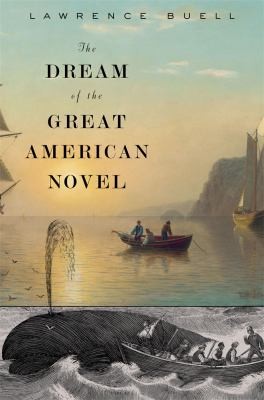
The Dream of the Great American Novel
0
0
As an Amazon Associate and affiliate partner, Menrva Books earns from qualifying purchases. Learn more
Author Description
The idea of 'the great American novel' continues to thrive almost as vigorously as in its nineteenth-century heyday, defying 150 years of attempts to dismiss it as amateurish or obsolete. In this landmark book, the first in many years to take in the whole sweep of national fiction, Lawrence Buell reanimates this supposedly antiquated idea, demonstrating that its history is a key to the dynamics of national literature and national identity itself. The dream of the G.A.N., as Henry James nicknamed it, crystallized soon after the Civil War. In fresh, in-depth readings of selected contenders from the 1850s onward in conversation with hundreds of other novels, Buell delineates four 'scripts' for G.A.N. candidates. One, illustrated by The Scarlet Letter, is the adaptation of the novel's story-line by later writers, often in ways that are contrary to the original author's own design. Other aspirants, including The Great Gatsby and Invisible Man, engage the American Dream of remarkable transformation from humble origins. A third script, seen in Uncle Tom's Cabin and Beloved, is the family saga that grapples with racial and other social divisions. Finally, mega-novels from Moby-Dick to Gravity's Rainbow feature assemblages of characters who dramatize in microcosm the promise and pitfalls of democracy. The canvas of the great American novel is in constant motion, reflecting revolutions in fictional fashion, the changing face of authorship, and the inseparability of high culture from popular. As Buell reveals, the elusive G.A.N. showcases the myth of the United States as a nation perpetually under construction.--book jacket.
Menrva's Summary
THE THESIS
The enduring concept of the 'great American novel' is re-examined as a dynamic reflection of national identity and literary evolution. Lawrence Buell, a distinguished scholar, analyzes the history and ongoing relevance of this literary ideal, which crystallized after the Civil War. Through close readings of canonical works and hundreds of others, Buell identifies four distinct narrative 'scripts' that contenders for this title have employed: adaptation of existing storylines, engagement with the American Dream of transformation, exploration of family sagas grappling with social divisions, and mega-novels dramatizing democratic ideals. The book argues that the shifting landscape of the great American novel mirrors changes in literary fashion, authorship, and the interplay between high and popular culture, ultimately showcasing the United States as a nation in perpetual construction.
THE SCOPE MAP
- Analysis of the historical trajectory of the 'great American novel' concept from its 19th-century origins.
- In-depth readings of key novels such as The Scarlet Letter, The Great Gatsby, Invisible Man, Uncle Tom's Cabin, Beloved, Moby-Dick, and Gravity's Rainbow.
- Identification and explication of four distinct narrative 'scripts' or archetypes for great American novels.
- Exploration of how the concept of the 'great American novel' reflects evolving national identity and cultural dynamics.
- Discussion of the interplay between literary fashion, authorial changes, and the relationship between high and popular culture.
- Examination of the United States as a 'nation perpetually under construction' through its literary output.
- Contextualization of the 'dream of the G.A.N.' as a crystallization point soon after the Civil War.
THE AUTHORITY PERSPECTIVE
The book is recognized as a landmark study that revitalizes the discussion around the 'great American novel.' Scholars and critics have noted Buell's comprehensive scope and insightful readings of canonical American fiction. The work is praised for its ability to connect literary history with broader themes of national identity and cultural evolution. It effectively demonstrates how the pursuit of the 'great American novel' has been a continuous, evolving project throughout American literary history.
Page Count:
567
Publication Date:
2014-01-01
ISBN-10:
0674051157
ISBN-13:
9780674051157
Non-Fiction
History
Fiction
Literary Fiction
American
Literary theory
Cultural History
Literary Criticism
Community Tags
Similar Books