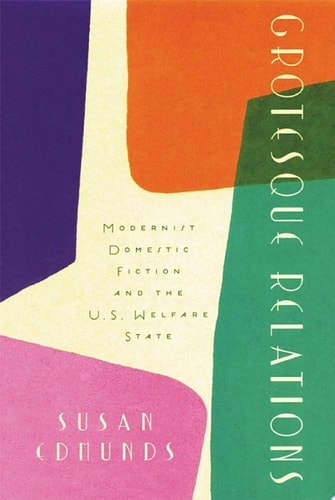
Grotesque Relations: Modernist Domestic Fiction and the U.S. Welfare State
0
0
As an Amazon Associate and affiliate partner, Menrva Books earns from qualifying purchases. Learn more
Author Description
In this book, Susan Edmunds explores he relationship between modernist domestic fiction and the rise of the U.S. welfare state. This relationship, which began in the Progressive era, emerged as maternalist reformers developed an inverted discourse of social housekeeping in order to call for state protection and regulation of the home. Modernists followed suit, turning the genre of domestic fiction inside out in order to represent new struggles on the border between home, market and state. Edmunds uses the work of Djuna Barnes, Jean Toomer, Tillie Olsen, Edna Ferber, Nathanael West, and Flannery O'Connor to trace the significance of modernists' radical reconstitution of the genre of domestic fiction. Using a grotesque aesthetic of revolutionary inversion, these writers looped their depictions of the domestic sphere through revolutionary discourses associated with socialism, consumerism and the avant-garde. These authors used their grotesque discourses to deal with issues of social conflict ranging from domestic abuse and racial violence to educational reform, public health care, eugenics, and social security. With the New Deal, the U.S. welfare state realized maternalist ambitions to disseminate a modern sentimental version of the home to all white citizens, successfully translating radical bids for collective social security into a racialized order of selective and detached domestic security. The book argues that modernists engaged and contested this historical trajectory from the start. In the process, they forged an enduring set of terms for understanding and negotiating the systemic forms of ambivalence, alienation and conflict that accompany Americans' contemporary investments in "family values."
Menrva's Summary
THE THESIS
How did modernist writers utilize the grotesque to contest the evolving relationship between the domestic sphere and the U.S. welfare state? Susan Edmunds, a scholar of American literature, examines the intersection of maternalist social reform and modernist literary production. She argues that authors inverted traditional domestic tropes to critique the racialized and exclusionary nature of the New Deal's vision of family security.
THE SCOPE MAP
What You Will Find
- Analysis of works by Djuna Barnes, Jean Toomer, Tillie Olsen, Edna Ferber, Nathanael West, and Flannery O'Connor.
- Examination of the 'grotesque aesthetic' as a tool for political and social commentary.
- Historical investigation into the Progressive era's 'social housekeeping' discourse.
Scope Limits
- The study focuses primarily on the U.S. context and does not provide a global comparative analysis of welfare states.
- The text does not offer a comprehensive history of the New Deal, focusing instead on its cultural and literary representations.
THE AUTHORITY PERSPECTIVE
Scholars recognize this work as a significant contribution to the study of modernist literature and its engagement with political history. Readers frequently note the academic density of the prose, which is intended for an audience familiar with literary theory and American social history.
Page Count:
268
Publication Date:
2008-01-01
Publisher:
Oxford University Press
ISBN-10:
0190450770
ISBN-13:
9780190450779
History
English
Social History
American
English & College Success
American History
Modernism
Domestic fiction
United States
Literary Criticism
Community Tags
Similar Books