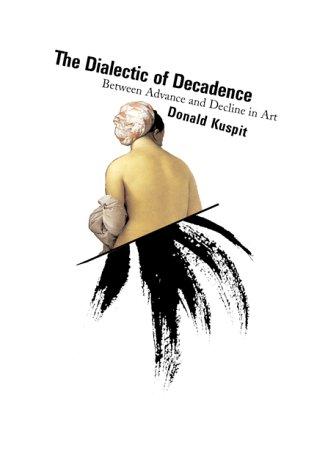
The Dialectic of Decadence
0
0
As an Amazon Associate and affiliate partner, Menrva Books earns from qualifying purchases. Learn more
Author Description
The Dialectic of Decadence examines art's dialectic between advance and decline, reason and desire, artificial wholeness and decadent disintegration. Kuspit disentangles misconceptions of decadence generated by the notion of advance in art. He asserts that any attempt in modern art to renounce expressionism and the pursuit of meaning in figurative art is in itself a result of discontentment and decadence - a loss of faith in history to tell its own story. Using a psychoanalytic approach, Kuspit topples Minimalist decrees most forcefully expressed by Donald Judd. Kuspit demonstrates that the "decadent" pursuits of artists like Sandro Chia and Georg Baselitz are rooted in the avant-garde unconscious. He demonstrates how modern art's internal battle with decadence is in fact a battle with itself, its own cause for existence. The Dialectic of Decadence is a work of insight into the way modernity and, for that matter, postmodernity try to extinguish the past, only to fuel its power further, and how the dialectic between them - between advance and decadence - is essential to creation.--BOOK JACKET.
Menrva's Summary
THE THESIS
The Dialectic of Decadence investigates the inherent tension between artistic progress and decline, and how this tension fuels creation. Donald B. Kuspit, utilizing a psychoanalytic approach, challenges the notion of linear advance in modern art, arguing that attempts to renounce expressionism and meaning in figurative art are themselves symptoms of decadence. He posits that the modern art world's internal struggle with decadence is a battle with its own foundational principles and historical narrative. The book explores how modernity and postmodernity, in their attempts to suppress the past, paradoxically amplify its influence, making the dialectic between advance and decadence crucial for artistic creation.
THE SCOPE MAP
- Analysis of the dialectic between artistic advance and decline
- Critique of the notion of linear progress in modern art
- Psychoanalytic interpretation of artistic discontentment and decadence
- Examination of artists like Sandro Chia and Georg Baselitz
- Deconstruction of Minimalist art, particularly the decrees of Donald Judd
- Exploration of the avant-garde unconscious
- Discussion on how modernity and postmodernity engage with the past
- The essential role of the advance/decadence dialectic in artistic creation
THE AUTHORITY PERSPECTIVE
Donald B. Kuspit's "The Dialectic of Decadence" is recognized for its insightful psychoanalytic examination of modern and postmodern art. The book is noted for its rigorous deconstruction of the concept of artistic progress, particularly as it relates to notions of decadence and the artist's engagement with the past. Critics and scholars have pointed to Kuspit's ability to disentangle complex theoretical ideas, offering a unique perspective on the internal conflicts driving contemporary artistic movements. The work is considered a significant contribution to art criticism, particularly for its engagement with psychoanalytic theory and its analysis of key artists and movements.
Page Count:
129
Publication Date:
2000-01-01
ISBN-10:
1581150520
ISBN-13:
9781581150520
Art
History
Non-Fiction
Art History
Art Criticism
Modern Art
Psychoanalytic Theory
Community Tags
Similar Books