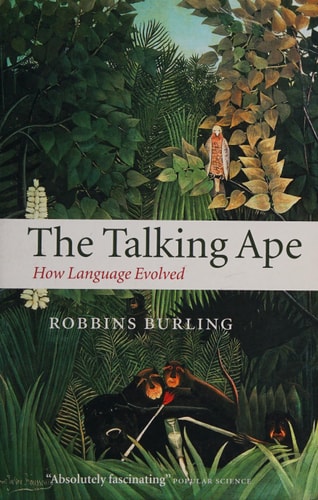
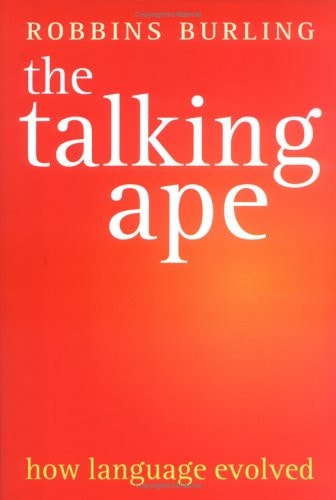
The Talking Ape: How Language Evolved
0
0
As an Amazon Associate and affiliate partner, Menrva Books earns from qualifying purchases. Learn more
Author Description
Humans never run out of things to say. We explain, we cajole, we gossip, and we flirt--all with the help of language. But how in the space of several million years did we evolve from an ordinary primate that that could not talk to the strange human primate that can't shut up?In this fascinating, thought-provoking book, Robbins Burling presents the most convincing account of the origins of language ever published, shedding new light on how speech affects the way we think, behave, and relate to each other, and offering us a deeper understanding of the nature of language itself. Burling argues that comprehension, rather than production, was the driving force behind the evolution of language--we could understand words before we could produce them. As he develops this insight, he investigates the first links between signs, sounds, and meanings and explores the beginnings of vocabulary and grammar. He explains what the earliest forms of communication are likely to have been, how they worked, and why they were deployed, suggesting that when language began it was probably much more dependent on words like "poke" or "whoosh," words whose sounds have a close association with what they refer to. Only gradually did language develop the immense vocabulary it has today. Burling also examines the qualities of mind and brain needed to support the operations of language and the selective advantages they offered those able to use them.Written in a crystal-clear style, constantly enlivened by flashes of wit and humor, here is the definitive account on the birth of language.
Menrva's Summary
THE THESIS
This book investigates the evolutionary origins of human language, specifically addressing how our ancestors transitioned from non-verbal primates to sophisticated communicators. Robbins Burling, a professor emeritus of anthropology and linguistics, synthesizes findings from evolutionary biology and cognitive science to propose that language comprehension preceded production. He argues that the selective pressures favoring the ability to understand complex signals drove the development of the human brain and the subsequent emergence of grammar and vocabulary.
THE SCOPE MAP
What You Will Find
- Analysis of the evolutionary timeline from non-verbal primates to modern humans.
- The hypothesis that comprehension capacity acted as the primary driver for linguistic evolution.
- Examination of the cognitive and neurological prerequisites for speech development.
- Exploration of the transition from iconic, sound-associated words to abstract grammatical structures.
THE AUTHORITY PERSPECTIVE
Experts and linguists recognize this work as a highly accessible entry point into the complex field of evolutionary linguistics. Readers frequently note the clarity of Burling's prose, which successfully distills dense academic theories into a coherent narrative for a general audience.
Page Count:
298
Publication Date:
2007-05-17
Publisher:
Oxford University Press
ISBN-10:
0199214034
ISBN-13:
9780199214037
Non-Fiction
Science
Evolutionary Biology
Linguistics
Anthropology
Community Tags
Other Editions(3)

Similar Books