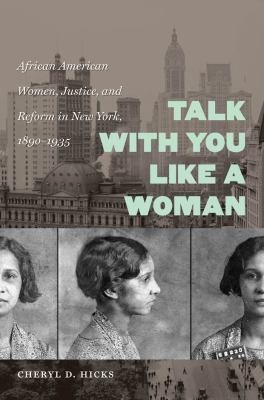
Talk With You Like a Woman: African American Women, Justice, and Reform in New York, 1890-1935
0
0
As an Amazon Associate and affiliate partner, Menrva Books earns from qualifying purchases. Learn more
Author Description
With this book, the author brings to light the voices and viewpoints of black working class women, especially southern migrants, who were the subjects of urban and penal reform in early twentieth-century New York. She compares the ideals of racial uplift and reform programs of middle-class white and black activists to the experiences and perspectives of those whom they sought to protect and, often, control. In need of support as they navigated the discriminatory labor and housing markets and contended with poverty, maternity, and domestic violence, black women instead found themselves subject to hostility from black leaders, urban reformers, and the police. Still, these black working class women struggled to uphold their own standards of respectable womanhood. Through their actions as well as their words, they challenged prevailing views regarding black women and morality in urban America. Drawing on extensive archival research, the author explores the complexities of black working class women's lives and illuminates the impact of racism and sexism on early twentieth-century urban reform and criminal justice initiatives.
Menrva's Summary
THE THESIS
This book investigates the experiences of Black working-class women in early 20th-century New York City, particularly those navigating urban and penal reforms. The author, Cheryl D. Hicks, draws on extensive archival research to compare the reformist ideals of middle-class white and Black activists with the lived realities of the women they aimed to help. These women, facing discriminatory labor and housing markets, poverty, and domestic violence, often encountered hostility rather than support from both Black leaders and white reformers. Despite these challenges, they actively worked to maintain their own standards of respectable womanhood, thereby contesting prevailing notions of Black women's morality in urban America.
THE SCOPE MAP
- The perspectives and experiences of Black working-class women, especially southern migrants, in New York City between 1890 and 1935.
- A comparison of reform programs and racial uplift ideals promoted by middle-class activists with the realities faced by the women targeted by these initiatives.
- An examination of the challenges Black women encountered, including discriminatory labor and housing markets, poverty, maternity, and domestic violence.
- An analysis of the hostility faced by these women from Black leaders, urban reformers, and the police.
- An exploration of how Black working-class women asserted their own standards of respectable womanhood and challenged prevailing views on morality.
- Insights into the impact of racism and sexism on early 20th-century urban reform and criminal justice systems.
- Detailed archival research forming the basis of the historical analysis.
THE AUTHORITY PERSPECTIVE
Cheryl D. Hicks's "Talk With You Like a Woman" offers a critical examination of urban reform and criminal justice initiatives in early 20th-century New York through the lens of Black working-class women. The book is noted for its extensive archival research, which allows for a nuanced comparison between the stated goals of reformers and the lived experiences of those subjected to reform. It highlights the complex interplay of racism, sexism, and class that shaped the lives of these women, challenging simplistic narratives of victimhood and agency. The work illuminates how these women actively negotiated their identities and upheld their own standards of respectability amidst significant societal pressures.
Page Count:
372
Publication Date:
2010-01-01
ISBN-10:
0807871621
ISBN-13:
9780807871621
Non-Fiction
Science
History
Urban History
Social Reform
Community Tags
Similar Books