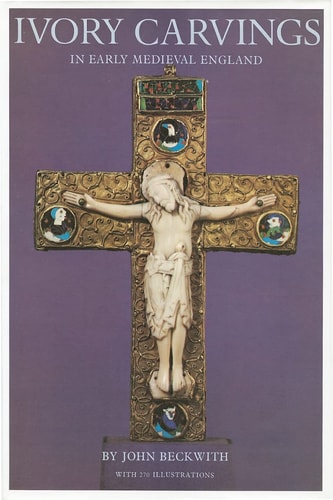
Ivory Carvings in Early Medieval England
0
0
As an Amazon Associate and affiliate partner, Menrva Books earns from qualifying purchases. Learn more
Author Description
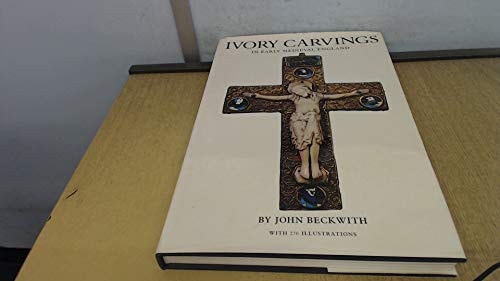
Ivory carvings are among the most beautiful achievements of medieval art. They reflect not only the deeply religious nature of the medieval world but also express the consummate skill and highly creative minds of those who carved them. The English craftsmen of the Early Middle Ages produced such renowned masterpieces as the Bury St Edmunds Cross and the Lewis Chessmen. John Beckwith provides a definitive study of English ivory carving from 700-1200 AD, which describes and illustrates over 160 carvings. He places the ivories in relation to contemporary illuminated manuscripts and enamel work. Through fascinating and lively portraits of some of the abbots and bishops who were the great patrons of their time, and in particular, Henry of Blois, bishop of Winchester, he places the art form firmly within its historical and cultural context.
Menrva's Summary
THE THESIS
This study investigates the technical evolution and cultural significance of ivory carving in England between 700 and 1200 AD. John Beckwith, a noted scholar of medieval art, utilizes his extensive knowledge of the period to analyze how these intricate objects functioned as both religious artifacts and expressions of elite patronage. By situating these carvings alongside contemporary illuminated manuscripts and enamel work, the author constructs a framework that links material culture to the broader ecclesiastical and social structures of the Early Middle Ages.
THE SCOPE MAP
What You Will Find
- A comprehensive catalog of over 160 distinct ivory carvings from the 700-1200 AD period.
- Comparative analysis between ivory work and contemporary artistic mediums like enamel and manuscript illumination.
- Biographical sketches of influential patrons, including Henry of Blois, Bishop of Winchester.
- Examination of the Bury St Edmunds Cross and the Lewis Chessmen as primary case studies.
THE AUTHORITY PERSPECTIVE
Experts recognize this work as a foundational text for understanding the stylistic development of English medieval sculpture. Readers frequently note the academic density of the prose and the thoroughness of the visual documentation provided.
Page Count:
168
Publication Date:
1982-05-06
Publisher:
Oxford University Press
ISBN-10:
0199210071
ISBN-13:
9780199210077
Ivories
Art History
Sculpture
British History
Religious Art
Community Tags
Other Editions(3)
Similar Books