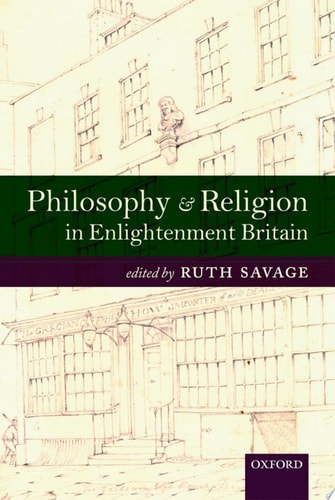
Philosophy and Religion in Enlightenment Britain: New Case Studies
0
0
As an Amazon Associate and affiliate partner, Menrva Books earns from qualifying purchases. Learn more
Author Description
These twelve new studies illustrate some of the techniques employed in intellectual history today. Exploring themes and issues pertaining to religion, philosophy, and their interrelations, as they exercised British thinkers in the "long" eighteenth century, they further our understanding of the period when some of the most significant works in western philosophy were written, at a time when theory and practice in science, politics, law, and theology were evolving and there was important contact with the Continent. Priority has been given to new work on primary sources. Figures examined range from Locke and Hume to relatively unfamiliar personalities, such as Martin Clifford, Henry Scougal, Samuel Haliday, and Thomas Cooper. Others treated include John Toland, Bernard Mandeville, Francis Hutcheson, Joseph Butler, Henry Home, Adam Smith, Joseph Priestley, Thomas Reid, and Dugald Stewart. Topics include the claims of biblical authority and religious experience as sources of truth; whether beliefs received on the evidence of authority (e.g. about resurrection) can be made intelligible; freedom of thought and conscience in philosophical, religious, and political contexts; shifts in the study of human nature; the claims of justice, and natural law. Contributors include distinguished and established scholars and exciting younger talent, bringing together historians of philosophy with scholars from theology, literature, history, and political science. New transcriptions of two pieces by Hume are included-a new letter illustrating his later attitude to politics and religion, and his early essay on ethics and chivalry.
Menrva's Summary
THE THESIS
This collection of twelve case studies investigates the complex interplay between religious belief and philosophical inquiry in eighteenth-century Britain. Edited by Ruth Savage, the volume gathers contributions from historians of philosophy, theology, and political science to examine how British thinkers navigated the evolving intellectual landscape of the Enlightenment. By prioritizing primary source analysis, the authors argue that the period's intellectual output was defined by a constant negotiation between traditional biblical authority and emerging scientific and political theories.
THE SCOPE MAP
What You Will Find
- Analysis of intellectual figures ranging from canonical thinkers like Locke, Hume, and Adam Smith to lesser-known personalities such as Martin Clifford and Samuel Haliday.
- Examination of thematic shifts regarding human nature, natural law, and the legitimacy of religious experience.
- Primary source research including new transcriptions of previously unexamined letters and essays by David Hume.
- Interdisciplinary methodology bridging the fields of theology, literature, history, and political science.
THE AUTHORITY PERSPECTIVE
Scholars and historians recognize this volume as a valuable contribution to the study of the long eighteenth century, particularly for its focus on under-researched primary materials. The text is noted for its academic rigor and its ability to synthesize diverse disciplinary perspectives into a coherent examination of Enlightenment thought.
Page Count:
288
Publication Date:
2012-06-18
Publisher:
Oxford University Press
ISBN-10:
0199227047
ISBN-13:
9780199227044
Religion
Philosophy
History
Intellectual History
Philosophy British
British History
Philosophy & Religion
Enlightenment
Community Tags
Similar Books