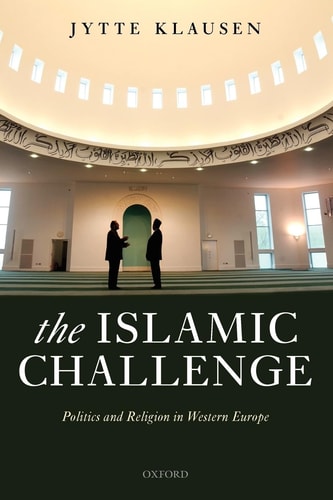
The Islamic Challenge: Politics and Religion in Western Europe
0
0
As an Amazon Associate and affiliate partner, Menrva Books earns from qualifying purchases. Learn more
Author Description
The voices in this book belong to parliamentarians, city councilors, doctors and engineers, a few professors, lawyers and social workers, owners of small businesses, translators, and community activists. They are also all Muslims, who have decided to become engaged in political and civic organizations. And for that reason, they constantly have to explain themselves, mostly in order to say who they are not. They are not fundamentalists, not terrorists, and most do not support the introduction of Islamic religious law in Europe--especially not its application to Christians. This book is about who these people are, and what they want.This book is based on three hundred interviews with European Muslim leaders from six European countries: Sweden, Denmark, the Netherlands, Great Britain, France, and Germany. The question of Islam in Europe is not a matter of global war and peace but raises difficult questions about the positions of Christianity and Islam in public life, and about European identities. Europe's Muslim political leaders are not aiming to overthrow liberal democracy and to replace secular law with Islamic religious law. Those are the positions of a minority. There is not one Muslim position on how Islam should develop in Europe but many views, and most Muslims are rather looking for ways to build institutions that will allow European Muslims to practice their religion in a way that is compatible with social integration.
Menrva's Summary
THE THESIS
This book investigates how Muslim political and civic leaders in Western Europe navigate their identities and integration within secular democratic societies. Author Jytte Klausen, a professor of politics, utilizes a comprehensive dataset derived from three hundred interviews conducted across six European nations. The work argues that the prevailing narrative of a monolithic, anti-democratic Islamic challenge is inaccurate, instead presenting a diverse spectrum of Muslim perspectives focused on institutional participation and social integration.
THE SCOPE MAP
What You Will Find
- Comparative analysis of Muslim political engagement in Sweden, Denmark, the Netherlands, Great Britain, France, and Germany.
- Qualitative data gathered from three hundred in-depth interviews with community leaders, professionals, and activists.
- Examination of the intersection between secular European law and religious practice in public life.
- Analysis of the internal diversity of Muslim viewpoints regarding institutional development and civic identity.
THE AUTHORITY PERSPECTIVE
Experts recognize this work as a significant empirical contribution to the study of contemporary European sociology and political integration. Readers frequently note the clarity of the author's methodology and the value of the primary source interviews in challenging common public misconceptions.
Page Count:
264
Publication Date:
2008-02-06
Publisher:
Oxford University Press
ISBN-10:
0199231982
ISBN-13:
9780199231980
Politics
Religion
Islam And State
Muslims europe
Sociology
Social Science
Islam
Europe
Community Tags
Similar Books