
Infectious Diseases: A Geographical Analysis: Emergence and Re-emergence
0
0
As an Amazon Associate and affiliate partner, Menrva Books earns from qualifying purchases. Learn more
Author Description
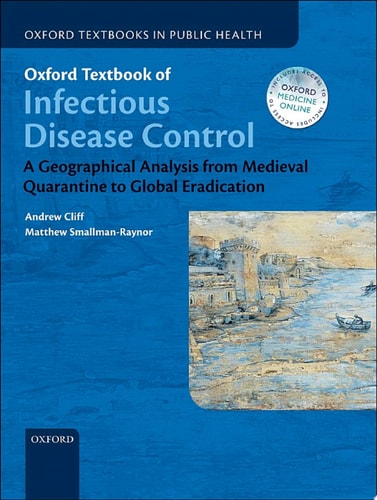
The last four decades of human history have seen the emergence of an unprecedented number of 'new' infectious diseases: the familiar roll call includes AIDS, Ebola, H5N1 influenza, hantavirus, hepatitis E, Lassa fever, legionnaires' and Lyme diseases, Marburg fever, Rift Valley fever, SARS, and West Nile. The outbreaks range in scale from global pandemics that have brought death and misery to millions, through to self-limiting outbreaks of mainly local impact. Some outbreaks have erupted explosively but have already faded away; some grumble along or continue to devastate as now persistent features in the medical lexicon; in others, a huge potential threat hangs uncertainly and worryingly in the air. Some outbreaks are merely local, others are worldwide.This book looks at the epidemiological and geographical conditions which underpin disease emergence. What are the processes which lead to emergence? Why now in human history? Where do such diseases emerge and how do they spread or fail to spread around the globe? What is the armoury of surveillance and control measures that may curb the impact of such diseases? But, uniquely, it sets these questions on the modern period of disease emergence in an historical context. First, it uses the historical record to set recent events against a much broader temporal canvas, finding emergence to be a constant theme in disease history rather than one confined to recent decades. It concludes that it is the quantitative pace of emergence, rather than its intrinsic nature, that separates the present period from earlier centuries. Second, it looks at the spatial and ecological setting of emergence, using hundreds of specially-drawn maps to chart the source areas of new diseases and the pathways of their spread. The book is divided into three main sections: Part 1 looks at early disease emergence, Part 2 at the processes of disease emergence, and Part 3 at the future for emergent diseases.
Menrva's Summary
THE THESIS
This book investigates the epidemiological and geographical drivers behind the emergence and re-emergence of infectious diseases in the modern era. The authors, a multidisciplinary team of geographers and epidemiologists, utilize historical data and spatial analysis to argue that while disease emergence is a constant historical theme, the current quantitative pace of these events represents a distinct shift. By framing recent outbreaks within a broader temporal and spatial context, the text provides a rigorous framework for understanding how environmental and human factors facilitate the global spread of pathogens.
THE SCOPE MAP
What You Will Find
- Historical analysis of disease emergence patterns across multiple centuries.
- Spatial and ecological modeling of pathogen transmission pathways.
- Extensive use of cartographic data to visualize source areas and spread.
- Evaluation of surveillance and control methodologies for public health management.
THE AUTHORITY PERSPECTIVE
Experts recognize this work as a foundational text for understanding the intersection of geography and infectious disease control. Readers frequently note the academic density of the prose and the high value of the specialized mapping included throughout the analysis.
Page Count:
500
Publication Date:
2009-09-28
Publisher:
Oxford University Press
ISBN-10:
0199244731
ISBN-13:
9780199244737
Science
History
Medicine
Public Health
Epidemiology
Geography
Epidemics
Community Tags
Similar Books












Reader Comments
Share Your Thoughts
No comments yet. Be the first to share your thoughts!