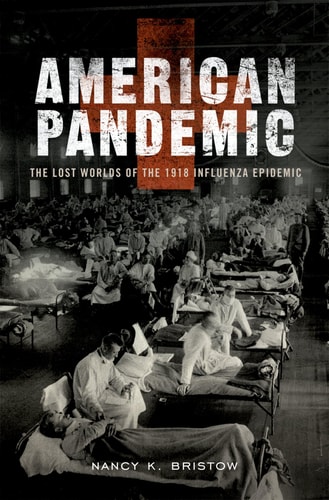
American Pandemic: The Lost Worlds of the 1918 Influenza Epidemic
0
0
As an Amazon Associate and affiliate partner, Menrva Books earns from qualifying purchases. Learn more
Author Description
Between the years 1918 and1920, influenza raged around the globe in the worst pandemic in recorded history, killing at least fifty million people, more than half a million of them Americans. Yet despite the devastation, this catastrophic event seems but a forgotten moment in the United States.American Pandemic offers a much-needed corrective to the silence surrounding the influenza outbreak. It sheds light on the social and cultural history of Americans during the pandemic, uncovering both the causes of the nation's public amnesia and the depth of the quiet remembering that endured. Focused on the primary players in this drama--patients and their families, friends, and community, public health experts, and health care professionals--historian Nancy K. Bristow draws on multiple perspectives to highlight the complex interplay between social identity, cultural norms, memory, and the epidemic. Bristow has combed a wealth of primary sources, including letters, diaries, oral histories, memoirs, novels, newspapers, magazines, photographs, government documents, and health care literature. She shows that though the pandemic caused massive disruption in the most basic patterns of American life, influenza did not create long-term social or cultural change, serving instead to reinforce the status quo and the differences and disparities that defined American life.As the crisis waned the pandemic slipped from the nation's public memory. The helplessness and despair Americans had suffered during the pandemic, Bristow notes, was a story poorly suited to a nation focused on optimism and progress. For countless survivors, though, the trauma never ended, shadowing the remainder of their lives with memories of loss. This book lets us hear these long-silent voices, reclaiming an important chapter in the American past.
Menrva's Summary
THE THESIS
This work investigates why the 1918 influenza pandemic, despite its catastrophic death toll, faded from the American public consciousness. Historian Nancy K. Bristow examines the social and cultural dimensions of the epidemic by analyzing how the crisis interacted with existing American norms, disparities, and identity. Utilizing a vast array of primary sources, she argues that the pandemic reinforced the status quo rather than catalyzing long-term social change, as the nation's cultural preference for optimism suppressed the trauma of the event.
THE SCOPE MAP
What You Will Find
- An analysis of the social and cultural impact of the 1918 influenza pandemic on American life.
- An examination of public health responses and the experiences of patients, families, and medical professionals.
- A synthesis of diverse primary source materials including diaries, letters, oral histories, and government documents.
- A study of collective memory and the factors contributing to the national amnesia regarding the epidemic.
THE AUTHORITY PERSPECTIVE
Experts recognize this text as a significant contribution to the social history of medicine, praised for its meticulous use of personal narratives to humanize statistical data. Readers frequently note the depth of the research and the author's ability to connect individual trauma to broader cultural trends in early twentieth-century America.
Page Count:
304
Publication Date:
2012-04-30
Publisher:
Oxford University Press
ISBN-10:
0199811342
ISBN-13:
9780199811342
History
Influenza
Epidemiology
Cultural History
Epidemics
Public Health
Social History
Community Tags
Similar Books