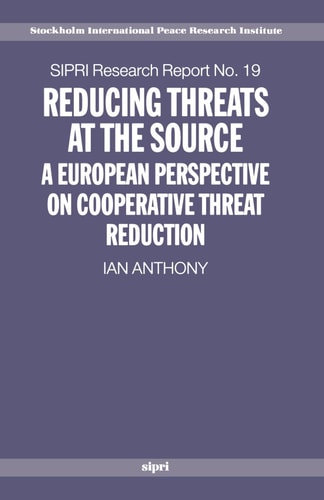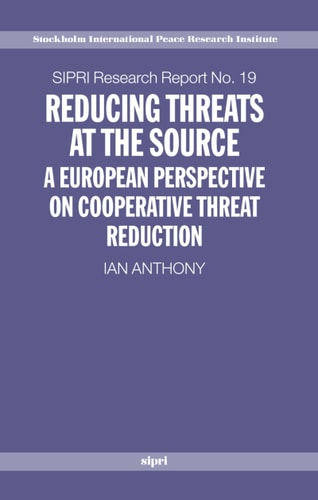
Reducing Threats at the Source: A European Perspective on Cooperative Threat Reduction
0
0
As an Amazon Associate and affiliate partner, Menrva Books earns from qualifying purchases. Learn more
Author Description
In 2002 the Group of Eight industrialized nations - in which Canada, France, Germany, Italy, Japan, Russia, the UK, the USA and representatives of the European Union participate - formed the Global Partnership Against the Spread of Weapons and Materials of Mass Destruction. The G8 pledged to raise up to $20 billion to carry out the Global Partnership projects over a 10-year period, initially in Russia but with the intention to expand the scope of projects to include other countries. These projects will help to specify the quantities and locations of weapons and materials and ensure that stocks are held under safe and secure custody to prevent diversion to unauthorized users or inappropriate uses. If the weapons or materials are not required, this practical assistance can also help to eliminate the surplus.The G8 initiative is only one of a number of activities sharing the same basic features: tailor-made measures jointly implemented on the territory of one state by a coalition including states, international organizations, local and regional governments, non-governmental organizations and the private sector.This report reviews the current cooperative threat reduction activities with a particular focus on projects and approaches engaging European partners. It examines the organizing principles for cooperative threat reduction and the lessons learned from past project implementation. Finally, it examines how European countries might organize their cooperative threat reduction activities to increase their coherence and effectiveness.
Menrva's Summary
THE THESIS
This report investigates how European nations can optimize their participation in cooperative threat reduction initiatives to effectively mitigate the proliferation of weapons of mass destruction. Author Ian Anthony, a senior researcher at the Stockholm International Peace Research Institute (SIPRI), utilizes a framework of institutional analysis to evaluate the G8 Global Partnership. He examines the logistical, political, and financial structures required to secure hazardous materials and eliminate surplus weaponry across international borders. The text argues for increased coherence among European partners to ensure that collaborative security projects achieve their stated objectives.
THE SCOPE MAP
What You Will Find
- An analysis of the G8 Global Partnership Against the Spread of Weapons and Materials of Mass Destruction.
- A review of project implementation strategies involving states, NGOs, and the private sector.
- Case studies of cooperative threat reduction activities within Russia and potential expansion regions.
- Recommendations for improving the organizational efficiency and policy alignment of European security contributions.
THE AUTHORITY PERSPECTIVE
Experts recognize this report as a foundational document for understanding the complexities of multilateral non-proliferation efforts in the early 21st century. Readers frequently note the technical density of the prose, which provides a detailed look at the administrative and diplomatic hurdles inherent in international security cooperation.
Page Count:
136
Publication Date:
2004-07-08
Publisher:
Oxford University Press
ISBN-10:
0199271771
ISBN-13:
9780199271771
National security
Security Studies
International relations
Public Policy
Military History