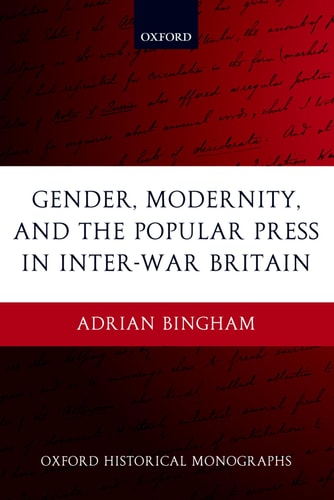
Gender, Modernity, and the Popular Press in Inter-War Britain
0
0
As an Amazon Associate and affiliate partner, Menrva Books earns from qualifying purchases. Learn more
Author Description
Journalists often claim that they write the first draft of history, but few historians examine the press in detail when preparing later drafts. This book demonstrates the value of popular newspapers as a historical source by using them to explore the attitudes and identities of inter-war Britain, and in particular the reshaping of femininity and masculinity. It provides a fresh insight into a period of great significance in the making of twentieth century gender identities, when women and men were coming to terms with the upheavals of the Great War, the arrival of democracy, and rapid social change. The book also deepens our understanding of the development of the modern media by showing how newspaper editors, in the fierce competition for readers, developed a template for the popular press that is still influential today.
Menrva's Summary
THE THESIS
This book investigates how the popular press in inter-war Britain functioned as both a reflection and a catalyst for shifting gender identities during a period of profound social transformation. Adrian Bingham, a historian specializing in modern British history, utilizes a wide array of newspaper archives to analyze how media outlets navigated the post-Great War landscape. He argues that the competitive nature of the press forced editors to construct specific narratives about masculinity and femininity, which in turn helped define the modern media template that persists in contemporary journalism.
THE SCOPE MAP
What You Will Find
- Analysis of inter-war British newspaper content and editorial strategies.
- Examination of the impact of the Great War and the arrival of democracy on social norms.
- Investigation into the construction of gender identities within mass-market media.
- Historical evidence drawn from archival newspaper records and circulation data.
THE AUTHORITY PERSPECTIVE
Experts recognize this work as a significant contribution to the study of media history and the cultural construction of gender in the early twentieth century. Scholars frequently cite the text for its rigorous archival research and its ability to bridge the gap between media studies and social history.
Page Count:
280
Publication Date:
2004-09-09
Publisher:
Clarendon Press
ISBN-10:
0199272476
ISBN-13:
9780199272471
History
British History
20th Century
Media Studies
Gender Studies
Social History
Sex Role
Great Britain
English History
Community Tags
Other Editions(4)


Similar Books