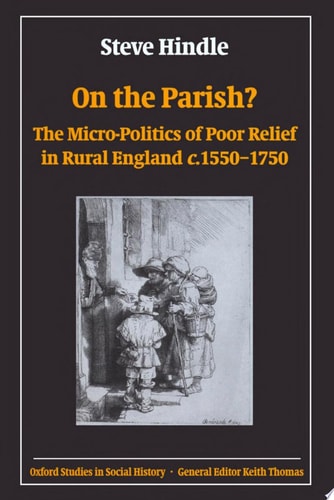
On the Parish?: The Micro-Politics of Poor Relief in Rural England 1550-1750
0
0
As an Amazon Associate and affiliate partner, Menrva Books earns from qualifying purchases. Learn more
Author Description
On the Parish? is a study of the negotiations which took place over the allocation of poor relief in the rural communities of sixteenth, seventeenth and early eighteenth century England. It analyzes the relationships between the enduring systems of informal support through which the laboring poor made attempts to survive for themselves; the expanding range of endowed charity encouraged by the late sixteenth century statutes for charitable uses; and the developing system of parish relief coordinated under the Elizabethan poor laws.Based on exhaustive research in the archives of the trustees who administered endowments, of the overseers of the poor who assessed rates and distributed pensions, of the magistrates who audited and coordinated relief and of the royal judges who played such an important role in interpreting the Elizabethan statutes, the book reconstructs the hierarchy of provision of relief as it was experienced among the poor themselves. It argues that receipt of a parish pension was only the final (and by no means the inevitable) stage in a protracted process of negotiation between prospective pensioners (or "collectioners," as they came to be called) and parish officers. This running theme is itself reflected in a series of chapters whose sequence seeks to mirror the experience of indigence, moving gradually (and by stages) from the networks of care provided by kin and neighbors into the bureaucracy of the parish relief system, emphasizing in particular the importance of labor discipline in the thinking of parish officers.By illuminating the workings of a relief system in which notions of entitlement were both under-developed and contested, On the Parish? provides historical perspective for contemporary debates about the rights and obligations of the poor in a society where the dismantling of the welfare state implies that there is, once again, no right to relief from cradle to grave.
Menrva's Summary
THE THESIS
This study investigates the complex micro-politics of poor relief in rural England between 1550 and 1750 to determine how the laboring poor navigated systems of survival. Professor Steve Hindle, a specialist in early modern English social history, utilizes extensive archival research from parish records, magistrate audits, and judicial interpretations of Elizabethan statutes. He argues that receiving parish aid was not an automatic right but the final result of a protracted, contested negotiation process between the indigent and local authorities.
THE SCOPE MAP
What You Will Find
- Analysis of the transition from informal kin-based support networks to formal parish-led welfare systems.
- Examination of the role of overseers, magistrates, and trustees in the administration of charitable endowments.
- Evidence derived from primary source archives including overseer accounts, judicial records, and charitable trust documents.
- Exploration of labor discipline as a central ideological component in the decision-making processes of parish officers.
THE AUTHORITY PERSPECTIVE
Historians and social scientists recognize this work as a foundational text for understanding the administrative evolution of the Elizabethan poor laws. Readers frequently note the academic density of the prose, which provides a rigorous, evidence-based framework for analyzing the historical roots of welfare entitlement.
Page Count:
532
Publication Date:
2004-10-07
Publisher:
Oxford University Press
ISBN-10:
0199271321
ISBN-13:
9780199271320
Economics
History
Sociology
British History
Poor
Public welfare
Social History
Community Tags
Similar Books