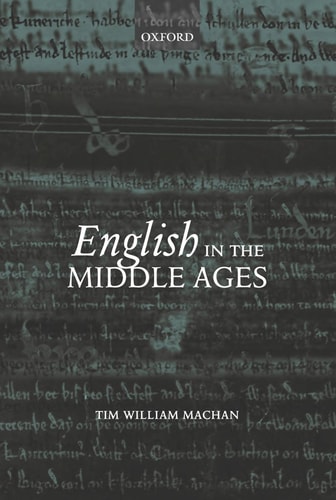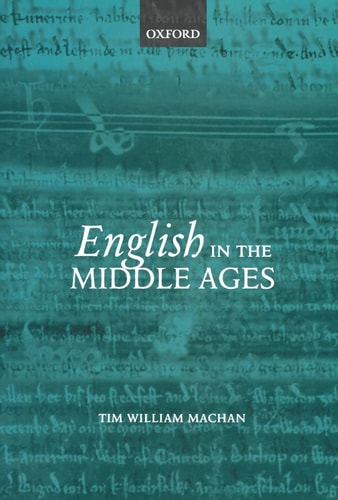
English in the Middle Ages
0
0
As an Amazon Associate and affiliate partner, Menrva Books earns from qualifying purchases. Learn more
Author Description
What did people in England in the Middle Ages think about language? What was their view of English, French, and Latin, and how did this influence the way they communicated? This book uses these questions as a basis for a ground-breaking investigation into the use and status of the English language in medieval England.Professor Machan suggests that many linguistic, literary, and historical considerations of medieval statements on language have significantly failed to take into account the social and linguistic contexts of their production. In this volume he explores not only medieval ideas about language but also the discursive traditions which generated them. English in the Middle Ages draws upon a wide range of documentary evidence, including most notably the royal letters issued in 1258 prior to the Barons' War. The author also analyzes the language spoken by Chaucer's pilgrims, theconversations in 'Sir Gawain and the Green Knight', and many other chronicles, poems, and commentaries. The book concludes with a consideration of the post-medieval history of the status of English in law, literature, and education.The book will interest scholars from a range of disciplines - particularly linguistics, literature, and history - and is written in clear, non-technical language.
Menrva's Summary
THE THESIS
This book investigates how medieval English society perceived the status and function of English, French, and Latin within their specific social and linguistic contexts. Professor Tim William Machan, a specialist in medieval language and literature, argues that previous historical and literary analyses have often overlooked the discursive traditions that shaped medieval attitudes toward language. By examining a diverse array of documentary evidence, he provides a framework for understanding how these linguistic ideologies influenced communication and social hierarchy in medieval England.
THE SCOPE MAP
What You Will Find
- Analysis of royal letters from 1258 regarding the Barons' War
- Examination of linguistic representation in the works of Chaucer and the Gawain-poet
- Investigation into the intersection of law, literature, and education in medieval England
- Evaluation of the post-medieval trajectory of the English language's status
THE AUTHORITY PERSPECTIVE
Scholars in linguistics, history, and literature frequently cite this work for its ability to synthesize complex sociolinguistic data into accessible prose. Experts highlight the book as a valuable resource for understanding the historical development of English language attitudes beyond traditional literary analysis.
Page Count:
216
Publication Date:
2005-07-07
Publisher:
Oxford University Press
ISBN-10:
0199282129
ISBN-13:
9780199282128
History
Literary Criticism
Linguistics