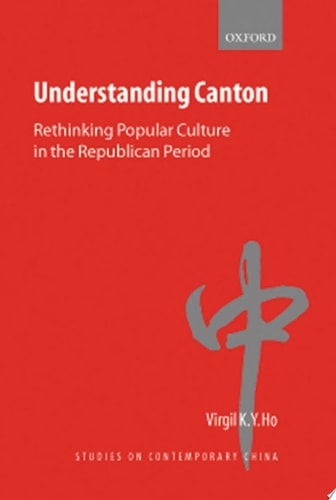
Understanding Canton: Rethinking Popular Culture in the Republican Period
0
0
As an Amazon Associate and affiliate partner, Menrva Books earns from qualifying purchases. Learn more
Author Description
This book broadens our understanding of the culture and society of Canton, the largest metroplois in South China, in the period between the two World Wars. It redresses serious misconceptions of the extent of damage inflicted by gambling, prostitution and opium consumption on the Cantonese society and its people. There is abundant evidence that common Cantonese were more receptive to a pro-Western mentality, despite their reputation for being jingoistic and anti-foreign. Tracing the rise of Cantonese opera as a major form of mass entertainment, and the emergence among the citizens a strong sense of pride in being a part of the modern city, help us learn more about the transformation of social and cultural life in this city in the modern era.
Menrva's Summary
THE THESIS
This book investigates the cultural and social evolution of Canton during the interwar period to challenge prevailing misconceptions regarding the city's moral and social decline. Virgil Ho, an expert in Chinese social history, utilizes archival records and contemporary accounts to re-examine the impact of vice industries like gambling and opium. By analyzing the shift toward a pro-Western mentality and the rise of local entertainment, the author constructs a framework that highlights the resilience and modernization of the Cantonese populace.
THE SCOPE MAP
What You Will Find
- Analysis of the social impact of gambling, prostitution, and opium consumption in Republican-era Canton.
- Examination of the rise of Cantonese opera as a primary vehicle for mass entertainment and cultural identity.
- Evidence-based investigation into the development of a modern urban consciousness among Cantonese citizens.
- Re-evaluation of the city's reputation for jingoism versus its actual receptivity to Western influences.
THE AUTHORITY PERSPECTIVE
Scholars in the field of Chinese history identify this work as a significant contribution to the study of urban transformation in South China. Readers frequently note the academic density of the prose, which provides a nuanced correction to traditional narratives regarding the Republican period.
Page Count:
520
Publication Date:
2006-02-16
Publisher:
Oxford University Press
ISBN-10:
0199282714
ISBN-13:
9780199282715
History
Sociology
Asian Studies
Urban Studies
Community Tags
Similar Books














