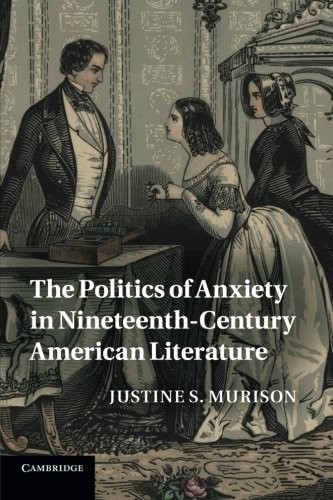
The Politics of Anxiety in Nineteenth-century American Literature
0
0
As an Amazon Associate and affiliate partner, Menrva Books earns from qualifying purchases. Learn more
Author Description
For much of the nineteenth century, the nervous system was a medical mystery, inspiring scientific studies and exciting great public interest. Because of this widespread fascination, the nerves came to explain the means by which mind and body related to each other. By the 1830s, the nervous system helped Americans express the consequences on the body, and for society, of major historical changes. Literary writers, including Nathaniel Hawthorne and Harriet Beecher Stowe, used the nerves as a metaphor to re-imagine the role of the self amidst political, social and religious tumults, including debates about slavery and the revivals of the Second Great Awakening. Representing the 'romance' of the nervous system and its cultural impact thoughtfully and, at times, critically, the fictional experiments of this century helped construct and explore a neurological vision of the body and mind. Murison explains the impact of neurological medicine on nineteenth-century literature and culture
Menrva's Summary
THE THESIS
This book investigates how the concept of the nervous system, a medical mystery of the nineteenth century, became a powerful metaphor in American literature to explore the self amidst societal upheaval. The widespread fascination with the nerves, seen as the link between mind and body, allowed writers like Nathaniel Hawthorne and Harriet Beecher Stowe to express the physical and social consequences of major historical changes. Through literary experiments, authors constructed and examined a neurological vision of the self, engaging critically with the cultural impact of this burgeoning scientific understanding. Murison details how neurological medicine shaped both the literature and culture of the era, offering a unique perspective on the period's anxieties and transformations.
THE SCOPE MAP
- Exploration of the nervous system as a medical mystery and public fascination in 19th-century America.
- Analysis of how literary writers, including Hawthorne and Stowe, used the nerves as a metaphor.
- Examination of the connection between the nervous system and the self amidst political, social, and religious changes.
- Discussion of the role of the nerves in expressing the consequences of historical events like slavery debates and the Second Great Awakening.
- Investigation into the 'romance' and cultural impact of the nervous system in literature.
- Construction and exploration of a neurological vision of the body and mind through fictional experiments.
- Explanation of the impact of neurological medicine on 19th-century American literature and culture.
THE AUTHORITY PERSPECTIVE
The book is recognized for its insightful analysis of the intersection between medical science and literary expression in nineteenth-century America. It is noted for its thorough examination of how the concept of the nervous system provided a framework for authors to explore individual identity and societal anxieties. The work is appreciated for its critical engagement with the cultural impact of neurological theories on the literature of the period. Murison's research offers a valuable perspective on the construction of a neurological understanding of the self during a time of significant historical change.
Page Count:
230
Publication Date:
2013-01-01
Publisher:
Cambridge University Press
ISBN-10:
1107694140
ISBN-13:
9781107694149
History
Non-Fiction
Science
Cultural History
MEDICAL History
American
Literary Criticism
Community Tags
Similar Books