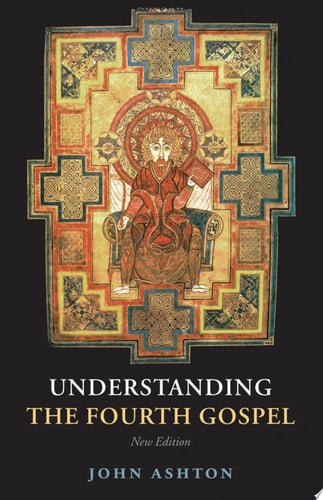
Understanding the Fourth Gospel
0
0
As an Amazon Associate and affiliate partner, Menrva Books earns from qualifying purchases. Learn more
Author Description
In this fully revised new edition of a pioneering study of John's gospel, John Ashton explores fresh topics and takes account of the latest scholarly debates. Ashton argues first that the thought-world of the gospel is Jewish, not Greek, and secondly that the text is many-layered, not simple, and composed over an extended period as the evangelist responded to the changing situation of the community he was addressing. Ashton seeks to provide new and coherent answers to what Rudolf Bultmann called the two great riddles of the gospel: its position in the development of Christian thought and its central or governing idea. In arguing that the first of these should be concerned rather with Jewish thought Ashton offers a partial answer to the most important and fascinating of all the questions confronted by New Testament scholarship: how did Christianity emerge from Judaism? Bultmann's second riddle is exegetical, and concerns the message of the book. Ashton's answer highlights a generally neglected feature of the gospel's concept of revelation: its debt to Jewish apocalyptic.
Menrva's Summary
THE THESIS
This work investigates the origins and theological framework of the Fourth Gospel by addressing its relationship to Jewish thought and its internal structural complexity. John Ashton, a prominent scholar in New Testament studies, utilizes historical-critical methods to challenge traditional interpretations that emphasize Greek influence. He argues that the gospel is a multi-layered text composed over time, reflecting the evolving needs of a specific community rather than a singular, static composition. By re-evaluating the text through the lens of Jewish apocalypticism, Ashton provides a comprehensive framework for understanding the gospel's unique position in early Christian development.
THE SCOPE MAP
What You Will Find
- Analysis of the gospel's intellectual roots within Jewish thought rather than Hellenistic philosophy.
- Examination of the text as a multi-layered document developed over an extended period.
- Integration of Jewish apocalyptic concepts as a primary driver of the gospel's revelation theology.
- Critical engagement with the scholarly legacy of Rudolf Bultmann regarding the gospel's central governing ideas.
THE AUTHORITY PERSPECTIVE
Scholars and students of theology frequently cite this text as a foundational resource for understanding the complex composition of the Gospel of John. Readers often note the academic density of the prose, which requires a strong background in biblical criticism to fully appreciate the author's nuanced arguments.
Page Count:
620
Publication Date:
2007-06-21
Publisher:
Oxford University Press
ISBN-10:
0199297614
ISBN-13:
9780199297610
Religion
History
Theology
Christianity