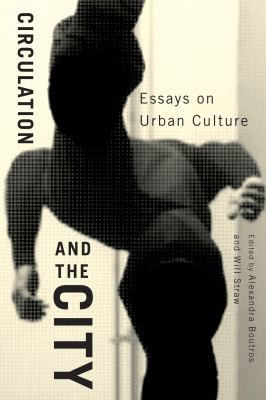
Circulation and the City
0
0
As an Amazon Associate and affiliate partner, Menrva Books earns from qualifying purchases. Learn more
Author Description
The lived experience of cities has long been defined by motion. As urban dwellers travel to work, home, and play they carve random or predictable pathways across neighbourhoods and districts. Circulation and the City investigates the urban capacity for movement, the city as a space of circulation, by taking into account not only the physical displacement of people but the circulation of cultures, things, and ideas. A series of rich case studies examine a range of topics, including neighbourhood gentrification, subway busking, yard sales, electronic waste, and language, refining the touchstone principle of circulation for the study of urban culture, both materially and theoretically. Contributors employ a variety of disciplinary approaches to create a richly varied picture of the multiple trajectories and effects of movement in the city. An engaging work that considers city planning, urban culture, and social behaviour, Circulation and the City adds a new dimension that revitalizes the ways we have commonly looked at - and thought about - the city.
Menrva's Summary
THE THESIS
The city is defined by constant motion, encompassing not just the physical displacement of people but the circulation of cultures, things, and ideas. This book investigates the urban capacity for movement, examining the city as a space of circulation through a series of rich case studies. It refines the principle of circulation for the study of urban culture, both materially and theoretically, by analyzing topics such as neighborhood gentrification, subway busking, yard sales, electronic waste, and language. Contributors employ a variety of disciplinary approaches to create a richly varied picture of the multiple trajectories and effects of movement in the city.
THE SCOPE MAP
- Case studies on neighborhood gentrification and its impact on circulation.
- Analysis of urban subcultures through phenomena like subway busking.
- Examination of informal economies and the circulation of goods via yard sales.
- Exploration of the movement and disposal of electronic waste in urban environments.
- Discussion of language as a form of cultural circulation within cities.
- Theoretical and material approaches to understanding urban movement.
- Interdisciplinary perspectives on city planning, urban culture, and social behavior.
THE AUTHORITY PERSPECTIVE
The book is presented as an engaging work that considers city planning, urban culture, and social behavior, adding a new dimension that revitalizes common perspectives on the city. Its contributors employ a variety of disciplinary approaches to create a richly varied picture of the multiple trajectories and effects of movement within urban environments. The case studies aim to refine the principle of circulation for the study of urban culture, addressing both material and theoretical aspects. The work is positioned to offer a fresh look at how we understand and interact with urban spaces.
Page Count:
306
Publication Date:
2010-01-01
ISBN-10:
0773536655
ISBN-13:
9780773536654
History
Philosophy
Non-Fiction
urban planning
Sociology
Urban Studies
Community Tags
Similar Books