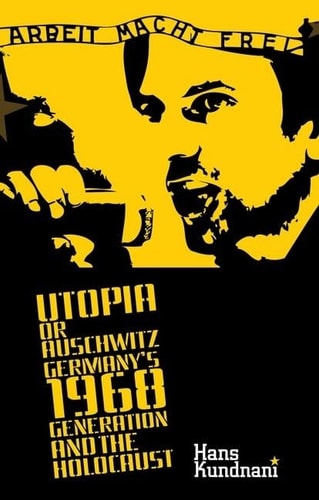
Utopia or Auschwitz: Germany's 1968 Generation and the Holocaust
0
0
As an Amazon Associate and affiliate partner, Menrva Books earns from qualifying purchases. Learn more
Author Description
One thing above all separated the radical students who demonstrated on the streets of West Berlin and Frankfurt in 1968 from their counterparts in Berkeley or New York. In the US, the baby boomers grew up in the shadow of what Tom Brokaw called the greatest generation. In its place, Germany had the so-called Auschwitz generation. What became known in Germany as the '68 generation' or just the Achtundsechziger had grown up knowing that their mothers and fathers were directly or indirectly responsible for Nazism and in particular for the Holocaust. Germany's 1968 generation did not merely dream of a better world as some of their contemporaries in other countries did; they felt compelled to act to save Germany from itself. It was an all-or-nothing choice: Utopia or Auschwitz. Kundnani shows that the struggle of Germany's '68 generation also had a darker side. Although the 'Achtundsechziger' imagined their struggle against capitalism in West Germany as 'resistance' against Nazism, they also had a tendency to see Auschwitz everywhere and, by using images and metaphors connected with Nazism to describe events in other parts of the world, they relativized Nazism and in particular the Holocaust. Even more disturbingly, despite the anti-fascist rhetoric of the 'Achtundsechziger', there were also anti-Semitic and nationalist currents in the West German New Left that grew out of the student movement. Utopia or Auschwitz traces the political journey of Germany's post-war generation and examines the influence that its ambivalent attitude to the Nazi past had on the foreign policy of the 'red-green' government between 1998 and 2005, which included several former members of the student movement like Joschka Fischer. The red-green government's schizophrenic foreign policy, manifested its response to the crises in Kosovo, Afghanistan and Iraq, reflected the 1968 generation's ambivalent attitude to the Nazi past.
Menrva's Summary
THE THESIS
This book investigates how the West German student movement of 1968 reconciled their identity with the legacy of the Holocaust and how this psychological burden shaped the nation's subsequent foreign policy. Hans Kundnani, a political analyst, examines the ideological evolution of the 'Achtundsechziger' generation, arguing that their obsession with the Nazi past led to a paradoxical foreign policy that both sought to avoid past atrocities and inadvertently relativized them. By analyzing the transition of former student radicals into the 'red-green' government of the late 1990s, the author maps the complex intersection of historical guilt, anti-fascist rhetoric, and modern geopolitical decision-making.
THE SCOPE MAP
What You Will Find
- An analysis of the West German New Left and its ideological roots in the post-war era.
- A critical examination of the 'red-green' government's foreign policy responses to conflicts in Kosovo, Afghanistan, and Iraq.
- Historical evidence linking the student movement's anti-Semitic and nationalist currents to their anti-capitalist rhetoric.
- A study of how metaphors of Nazism were utilized to interpret global political events.
THE AUTHORITY PERSPECTIVE
Experts identify this work as a significant contribution to understanding the psychological and political legacy of the 1968 generation in Germany. Readers frequently note the academic density of the prose and the author's ability to connect historical trauma with contemporary diplomatic outcomes.
Page Count:
320
Publication Date:
2009-01-01
Publisher:
Oxford University Press
ISBN-10:
0199327033
ISBN-13:
9780199327034
History
Politics
World politics
Germany
Europe
Community Tags
Similar Books