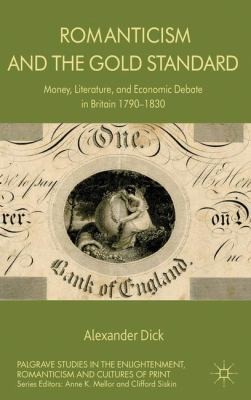
Romanticism and the Gold Standard: Money, Literature, and Economic Debate in Britain, 1790-1830
0
0
As an Amazon Associate and affiliate partner, Menrva Books earns from qualifying purchases. Learn more
Author Description
In 1816, the British government did something no one had ever done before: it introduced the first official gold standard in history. Through a close analysis of the pamphlets, reviews, lectures, journalism, editorials, poems, and novels surrounding the gold standard, this book examines its significance to the culture and literature of Romantic-era Britain. The gold standard was not a material object or universal concept, but a self-reflexive discourse that raised fundamental questions about knowledge, value, and social life. While politicians and financial experts believed that gold was the key to the nation's economic confidence, writers such as Ricardo, Malthus, Coleridge, Shelley, Austen, and Scott transformed the debates on the standard into a new disposition reflecting the difficulties and ambivalence of modern commerce: embarrassment. In this comprehensive and authoritative study, the author demonstrates the importance of monetary controversies to the story of Romanticism and of literary analysis to our understanding of money.
Menrva's Summary
THE THESIS
This book investigates the cultural and literary significance of Britain's introduction of the first official gold standard in 1816. Through an examination of pamphlets, reviews, lectures, journalism, editorials, poems, and novels from the Romantic era, the study reveals how this economic policy became a central discourse that prompted fundamental questions about knowledge, value, and social life. While financial experts saw the gold standard as crucial for national economic confidence, writers like Ricardo, Malthus, Coleridge, Shelley, Austen, and Scott reframed the debates, reflecting the complexities and ambivalence of modern commerce. The author argues for the profound impact of monetary controversies on Romanticism and the value of literary analysis in understanding economic concepts.
THE SCOPE MAP
- Analysis of pamphlets, reviews, lectures, journalism, editorials, poems, and novels from Romantic-era Britain.
- Focus on the introduction and significance of the first official gold standard in history.
- Exploration of the gold standard as a self-reflexive discourse raising questions about knowledge, value, and social life.
- Examination of how writers like Ricardo, Malthus, Coleridge, Shelley, Austen, and Scott engaged with monetary debates.
- Demonstration of the connection between monetary controversies and the development of Romanticism.
- Argument for the importance of literary analysis in understanding money and economic discourse.
- Study of the concept of 'embarrassment' as a reflection of modern commerce's difficulties and ambivalence.
THE AUTHORITY PERSPECTIVE
This comprehensive and authoritative study is recognized for its deep dive into the intersection of economic policy and literary output during a pivotal period in British history. The author's meticulous analysis of diverse textual sources, from political pamphlets to poetry, highlights the complex relationship between the gold standard and the cultural imagination of Romantic Britain. It is noted for demonstrating how literary works not only reflected but also shaped the discourse surrounding economic matters, particularly the anxieties and ambivalences of burgeoning modern commerce. The book is considered essential for understanding the broader cultural context of Romanticism and the historical evolution of economic thought.
Page Count:
264
Publication Date:
2013-01-01
ISBN-10:
1137292911
ISBN-13:
9781137292919
Non-Fiction
Economics
History
Literary Criticism
Community Tags
Similar Books