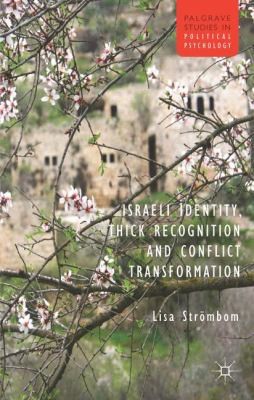
Israeli Identity, Thick Recognition, and Conflict Transformation
0
0
As an Amazon Associate and affiliate partner, Menrva Books earns from qualifying purchases. Learn more
Author Description
The divisive and malleable nature of history is at its most palpable in situations of intractable conflict between nations or peoples. In these circumstances, how each party interprets or appropriates historical accounts informs their understanding of the roots of the conflict as well as how they relate to and interact with their adversaries. This book aims to advance our understanding of the significance of history in informing the relationship between parties involved in intractable conflicts through the concept of thick recognition and by exploring its relevance specifically in relation to Israel. It suggests that the recognition of crucial identity elements, such as widely shared understandings of history, might increase the potential for relationship transformation in intractable conflicts. More widely, the book discusses how the Israeli debates over New History can be understood as related to processes of conflict transformation as well as seeking answers to what can be seen as facilitating and inhibiting circumstances for the introduction of new understandings of history in the debates on Israeli New History
Menrva's Summary
THE THESIS
This book investigates how historical interpretations shape intractable conflicts, focusing on the Israeli-Palestinian context and the concept of 'thick recognition'. It explores how shared understandings of history, when recognized by opposing parties, can foster relationship transformation. The work examines the Israeli debates over 'New History' as a lens through which to understand processes of conflict transformation, identifying factors that facilitate or inhibit the adoption of new historical narratives.
THE SCOPE MAP
- The concept of 'thick recognition' as applied to historical identity elements.
- Analysis of the Israeli 'New History' debates.
- Exploration of how historical narratives inform inter-group relations in intractable conflicts.
- Identification of facilitating and inhibiting circumstances for historical narrative change.
- Case study focus on the Israeli context.
THE AUTHORITY PERSPECTIVE
The book's premise suggests a dense, academic exploration of identity and history in conflict zones. Its focus on 'thick recognition' and the specific case of Israeli 'New History' points to a specialized audience interested in political science, sociology, and conflict studies. The framing indicates an analytical approach to understanding how historical narratives can be both a source of conflict and a potential pathway toward transformation.
Page Count:
191
Publication Date:
2013-01-01
ISBN-10:
1137301503
ISBN-13:
9781137301505
Politics
History
Non-Fiction
Sociology
Identity politics
Conflict Resolution
Community Tags
Similar Books