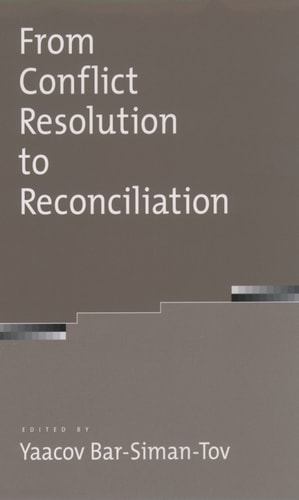
From Conflict Resolution to Reconciliation
0
0
As an Amazon Associate and affiliate partner, Menrva Books earns from qualifying purchases. Learn more
Author Description
This volume represents an important new step forward in the fields of conflict resolution and peace studies. Its essays argue that, while conflict resolution is well equipped to bring about temporary settlements and brief periods of peace in volatile situations, conventional conflict resolution techniques are not capable of building long-term stability. Instead, the authors contend, practitioners of conflict resolution need to focus more on reconciliation (the restoration of confidence, friendship, and harmony between rivals) than on mere conflict resolution. Whereas traditional conflict resolution has focused primarily on halting quarrels with agreements between leaders on each side of a conflict, reconciliation techniques shift the focus in two ways. First, they take more of a grassroots approach, building agreement among the members of rival communities, not only between leaders. Second, reconciliation takes a long-term view of dispute resolution. While the authors acknowledge that the role of traditional conflict resolution is important in stopping violence and tension, they argue that, in order to achieve stable peace, negotiators and practitioners of conflict resolution must focus much more on what is to be done after an agreement among leaders is reached.
Menrva's Summary
THE THESIS
This volume investigates the limitations of traditional conflict resolution techniques and proposes reconciliation as the necessary framework for achieving long-term stability in volatile regions. Yaacov Bar-Siman-Tov and contributing scholars analyze the transition from temporary cessation of hostilities to sustainable peace. The text argues that while elite-level agreements are effective for halting immediate violence, they fail to address the underlying social fractures that necessitate a grassroots, long-term approach to restoring harmony between rival communities.
THE SCOPE MAP
What You Will Find
- Comparative analysis between elite-level conflict resolution and community-based reconciliation.
- Theoretical frameworks for transitioning from temporary settlements to durable peace.
- Examination of the psychological and social requirements for restoring trust between former adversaries.
Scope Limits
- The text does not provide a step-by-step manual for specific diplomatic negotiations.
- It does not cover every historical conflict, focusing instead on the theoretical shift in peace studies methodology.
THE AUTHORITY PERSPECTIVE
Experts in peace studies identify this work as a significant contribution to the evolution of conflict resolution theory. Readers frequently note the academic density of the prose, which serves as a foundational text for scholars and practitioners interested in post-agreement stability.
Page Count:
301
Publication Date:
2004-01-01
Publisher:
Oxford University Press
ISBN-10:
0190290323
ISBN-13:
9780190290320
International relations
Sociology
Family & Consumer Sciences
Peace studies
Conflict Resolution
Community Tags
Similar Books