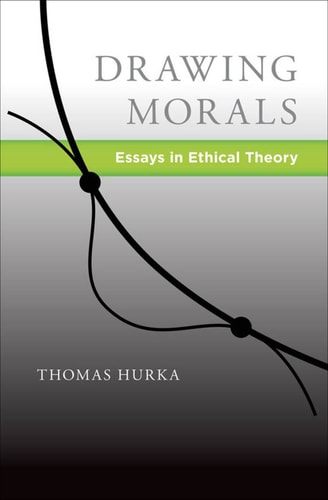
Drawing Morals: Essays in Ethical Theory
0
0
As an Amazon Associate and affiliate partner, Menrva Books earns from qualifying purchases. Learn more
Author Description
This volume contains selected essays in moral and political philosophy by Thomas Hurka. The essays address a wide variety of topics, from the well-rounded life and the value of playing games to proportionality in war and the ethics of nationalism. They also share a common aim: to illuminate the surprising richness and subtlety of our everyday moral thought by revealing its underlying structure, which they often do by representing that structure on graphs. More specifically, the essays all give what the first in the volume calls "structural" as against "foundational" analyses of moral views. Eschewing the grander ambition of grounding our ideas about, say, virtue or desert in claims that use different concepts and concern some other, allegedly more fundamental topic, they examine these ideas in their own right and with close attention to their details. As well as illuminating their individual topics, the essays illustrate the insights this structural method can yield.
Menrva's Summary
THE THESIS
This volume investigates whether the complex structures of everyday moral thought can be illuminated through structural analysis rather than foundational grounding. Thomas Hurka, a prominent philosopher, presents a collection of essays that apply rigorous analytical methods to diverse ethical topics. By eschewing grand foundational claims, the author focuses on the internal logic of concepts such as virtue, desert, and proportionality, often utilizing graphical representations to map these moral frameworks.
THE SCOPE MAP
What You Will Find
- Structural analyses of moral concepts including virtue, desert, and the well-rounded life.
- Methodological applications of graphical representations to ethical theory.
- Investigations into political philosophy topics such as the ethics of nationalism and proportionality in war.
- A defense of structural analysis as a primary tool for understanding moral thought.
THE AUTHORITY PERSPECTIVE
Experts recognize this collection as a significant contribution to contemporary moral philosophy, particularly for its innovative use of structural mapping. Readers frequently note the analytical density of the prose, which serves as a rigorous resource for students and scholars of ethical theory.
Page Count:
288
Publication Date:
2011-01-01
Publisher:
Oxford University Press
ISBN-10:
0199339961
ISBN-13:
9780199339969
Philosophy
Non-Fiction
Moral Philosophy
Political Philosophy
Ethics
Community Tags
Other Editions(2)
Similar Books