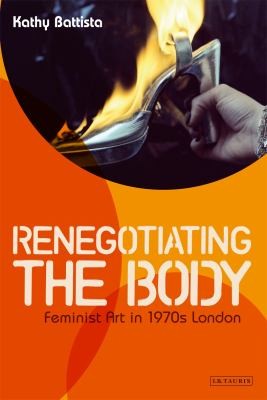
Renegotiating The Body: Feminist Art In 1970s London
0
0
As an Amazon Associate and affiliate partner, Menrva Books earns from qualifying purchases. Learn more
Author Description
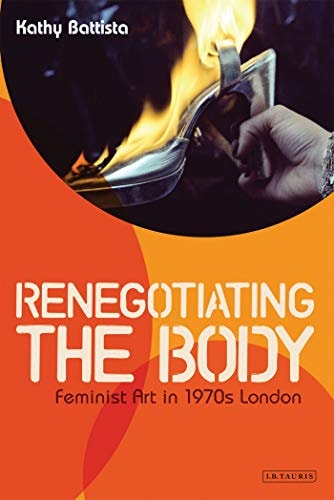
What makes art 'feminist art'? There can be no essential feminist aesthetic, argues Kathy Battista in this exciting new art history, although feminist artists do have a unique aesthetic. Domesticity, the body, its traces, and sexuality have become prominent strands in contemporary feminist practice but where did these preoccupations begin and how did they come to signify a particular type of art? Kathy Battista's (re- ) engagement with the founding generation of female practitioners centres on 1970s London as the cultural hub from which a new art practice arose. Emphasizing the importance of artists including Bobby Baker, Anne Bean, Catherine Elwes, Rose English, Alexis Hunter, Hannah O'Shea and Kate Walker, and examining works such as Mary Kelly's "Post-Partum Document", Judy Clark's 1973 exhibition Issues and Cosey Fanni Tutti's "Prostitution", shown in 1976, Kathy Battista investigates some of the most controversial and provocative art from the era.
Menrva's Summary
THE THESIS
This art history investigates the origins and significance of feminist art practices that emerged in 1970s London. Kathy Battista examines the preoccupations with domesticity, the body, its traces, and sexuality that became prominent in contemporary feminist art, tracing their roots to this pivotal era. Focusing on key artists such as Bobby Baker, Anne Bean, Catherine Elwes, Rose English, Alexis Hunter, Hannah O'Shea, and Kate Walker, the book analyzes controversial works like Mary Kelly's 'Post-Partum Document', Judy Clark's 1973 exhibition 'Issues', and Cosey Fanni Tutti's 1976 'Prostitution'. Battista argues that while there may not be an essential feminist aesthetic, feminist artists do possess a unique aesthetic that was powerfully shaped by the cultural landscape of 1970s London.
THE SCOPE MAP
- Exploration of feminist art's emergence in 1970s London.
- Analysis of recurring themes: domesticity, the body, its traces, and sexuality.
- Focus on prominent artists: Bobby Baker, Anne Bean, Catherine Elwes, Rose English, Alexis Hunter, Hannah O'Shea, Kate Walker.
- In-depth examination of significant artworks: Mary Kelly's 'Post-Partum Document', Judy Clark's 'Issues', Cosey Fanni Tutti's 'Prostitution'.
- Argument against an essential feminist aesthetic while acknowledging a unique feminist artistic sensibility.
- Contextualization of art practices within the cultural milieu of 1970s London.
THE AUTHORITY PERSPECTIVE
This book is likely to be of significant interest to art historians, feminist scholars, and students of 20th-century art. The detailed examination of specific artworks and artists provides a rich resource for understanding the development of feminist art. The author's argument regarding the unique aesthetic of feminist artists, while not essentialist, offers a nuanced perspective on the movement. The focus on 1970s London as a cultural hub highlights the importance of specific geographical and temporal contexts in artistic innovation.
Page Count:
224
Publication Date:
2013-01-01
ISBN-10:
1848859619
ISBN-13:
9781848859616
Non-Fiction
Art
History
Art History
Performance art