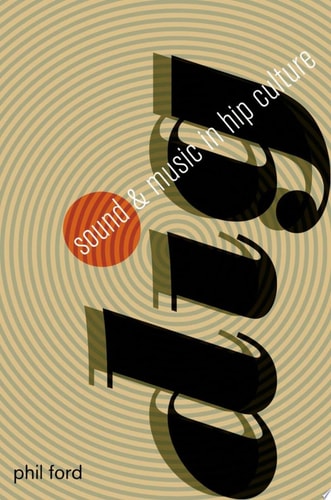
Dig: Sound and Music in Hip Culture
0
0
As an Amazon Associate and affiliate partner, Menrva Books earns from qualifying purchases. Learn more
Author Description
Hipness has been an indelible part of America's intellectual and cultural landscape since the 1940s. But the question What is hip? remains a kind of cultural koan, equally intriguing and elusive. In Dig, Phil Ford argues that while hipsters have always used clothing, hairstyle, gesture, and slang to mark their distance from consensus culture, music has consistently been the primary means of resistance, the royal road to hip. Hipness suggests a particular kind of alienation from society--alienation due not to any specific political wrong but to something more radical, a clash of perception and consciousness. From the vantage of hipness, the dominant culture constitutes a system bent on excluding creativity, self-awareness, and self-expression. The hipster's project is thus to define himself against this system, to resist being stamped in its uniform, squarish mold. Ford explores radio shows, films, novels, poems, essays, jokes, and political manifestos, but argues that music more than any other form of expression has shaped the alienated hipster's identity. Indeed, for many avant-garde subcultures music is their raison d'être. Hip intellectuals conceived of sound itself as a way of challenging meaning--that which is cognitive and abstract, timeless and placeless--with experience--that which is embodied, concrete and anchored in place and time. Through Charlie Parker's "Ornithology," Ken Nordine's "Sound Museum," Bob Dylan's "Ballad of a Thin Man," and a range of other illuminating examples, Ford shows why and how music came to be at the center of hipness. Shedding new light on an enigmatic concept, Dig is essential reading for students and scholars of popular music and culture, as well as anyone fascinated by the counterculture movement of the mid-twentieth-century.Publication of this book was supported by the AMS 75 PAYS Endowment of the American Musicological Society, funded in part by the National Endowment for the Humanities and the Andrew W. Mellon Foundation.
Menrva's Summary
THE THESIS
How does music function as the primary vehicle for identity and resistance within American hip culture? Phil Ford, a scholar of musicology, investigates the elusive concept of 'hipness' by analyzing its evolution from the 1940s onward. He argues that while hip culture utilizes various aesthetic markers, music serves as the central mechanism for expressing a radical alienation from consensus society. By examining the intersection of sound, perception, and consciousness, Ford demonstrates how hip intellectuals used music to challenge the perceived sterility of the dominant culture.
THE SCOPE MAP
What You Will Find
- Analysis of mid-twentieth-century counterculture movements and their intellectual foundations.
- Examination of diverse media including radio, film, literature, and political manifestos.
- Case studies of specific musical works by artists such as Charlie Parker, Ken Nordine, and Bob Dylan.
- Theoretical framework connecting embodied sound to the rejection of abstract, mainstream cognitive norms.
THE AUTHORITY PERSPECTIVE
Scholars and students of popular music frequently cite this text for its rigorous academic approach to a historically nebulous cultural phenomenon. Experts highlight the book as a foundational resource for understanding the philosophical underpinnings of mid-century subcultures.
Page Count:
320
Publication Date:
2013-01-01
Publisher:
Oxford University Press
ISBN-10:
0199331022
ISBN-13:
9780199331024
History
Music
Music History
Counterculture
Music
Popular music
Humanities
Sociology
Community Tags
Similar Books