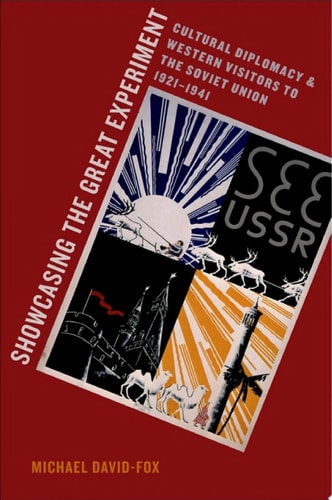
Showcasing the Great Experiment: Cultural Diplomacy and Western Visitors to the Soviet Union, 1921-1941
0
0
As an Amazon Associate and affiliate partner, Menrva Books earns from qualifying purchases. Learn more
Author Description
During the 1920s and 1930s thousands of European and American writers, professionals, scientists, artists, and intellectuals made a pilgrimage to experience the "Soviet experiment" for themselves. Showcasing the Great Experiment explores the reception of these intellectuals and fellow-travelers and their cross-cultural and trans-ideological encounters in order to analyze Soviet attitudes towards the West.Many of the twentieth century's greatest writers and thinkers, including Theodore Dreiser, André Gide, Paul Robeson, and George Bernard Shaw, notoriously defended Stalin's USSR despite the unprecedented violence of its prewar decade. While many visitors were profoundly affected by their Soviet tours, so too was the Soviet system. The early experiences of building showcases and teaching outsiders to perceive the future-in-the-making constitute a neglected international part of the emergence of Stalinism at home. Michael David-Fox contends that each side critically examined the other, negotiating feelings of inferiority and superiority, admiration and enmity, emulation and rejection. By the time of the Great Purges, these tensions gave way to the dramatic triumph of xenophobia and isolationism; whereas in the twenties the new regime assumed it had much to learn from Western modernity, by the Stalinist thirties the Soviet order was declared superior in all respects. Drawing on the declassified archival records of the agencies charged with crafting the international image of communism, David-Fox shows how Soviet efforts to sell the Bolshevik experiment abroad through cultural diplomacy shaped and were, in turn, shaped by the ongoing project of defining the Soviet Union from within. These interwar Soviet methods of mobilizing the intelligentsia for the international ideological contest, he argues, directly paved the way for the cultural Cold War.
Menrva's Summary
THE THESIS
This book investigates how the Soviet Union utilized cultural diplomacy to manage the perceptions of Western intellectuals and how these interactions influenced the internal development of the Stalinist state. Michael David-Fox, a scholar of Russian and Soviet history, utilizes declassified archival records from Soviet agencies to examine the period between 1921 and 1941. He argues that the Soviet state's efforts to project a specific image to foreign visitors were not merely propaganda, but a reciprocal process that shaped Soviet identity and domestic policy. By analyzing the encounters between the regime and prominent Western figures, the author demonstrates how these exchanges evolved from an openness to Western modernity into the isolationist xenophobia of the late 1930s.
THE SCOPE MAP
What You Will Find
- Analysis of the interwar period from 1921 to 1941 regarding Soviet-Western intellectual relations.
- Examination of the administrative mechanisms used by the Soviet state to host and influence foreign visitors.
- Primary source evidence derived from declassified Soviet archival records of state agencies.
- Exploration of the transition from early Soviet engagement with Western modernity to the isolationism of the Stalinist era.
THE AUTHORITY PERSPECTIVE
Historians and scholars of the Cold War frequently cite this work as a foundational text for understanding the origins of Soviet cultural diplomacy. Readers often note the academic density of the prose, which provides a rigorous and nuanced look at the intersection of international politics and domestic ideology.
Page Count:
407
Publication Date:
2011-01-01
Publisher:
Oxford University Press
ISBN-10:
0199339910
ISBN-13:
9780199339914
History
Propaganda
European History
Intellectuals
Modern History
Public opinion
Soviet Union
International relations
Intellectual History
United States
Community Tags
Similar Books