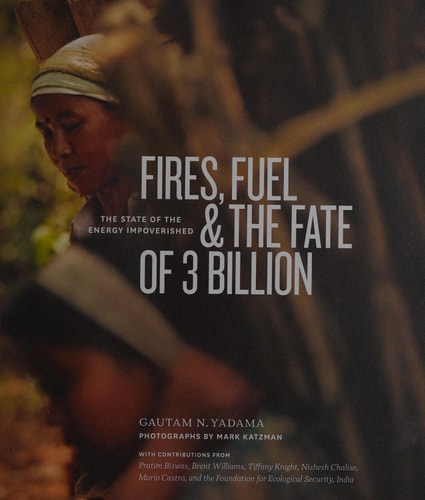
Fires, Fuel, and the Fate of 3 Billion: The State of the Energy Impoverished
0
0
As an Amazon Associate and affiliate partner, Menrva Books earns from qualifying purchases. Learn more
Author Description
Inside small homes and huts throughout the developing world, billions of people burn fires in rudimentary stoves to prepare their meals and heat their homes. Besides providing heat, these stoves also release large amounts of dense black soot, which has a staggeringly negative impact on the health, ecosystems, and advancement of the poor in the developing world.Fires, Fuel, and the Fate of 3 Billion examines the complex nexus of issues at play in the developing world's use of crude cookstoves -- factors such as poverty, energy, environment, and gender inequality. Melding succinct prose, scientific synthesis, and unforgettable images of communities in rural India, this multidisciplinary work aims to prompt new awareness of a wicked problem: how families can depend on, and be plagued by, crude cookstoves.What is clear in this visual and scientific treatise is the fact this is not simply a problem of rudimentary stoves; it is a symptom of energy insecurity. The images, narratives, and illustrated scientific data make this book an urgent call to better understand and address energy poverty and household air pollution around the globe.
Menrva's Summary
THE THESIS
This book investigates the systemic causes and consequences of energy poverty, specifically focusing on the reliance on crude cookstoves among three billion people in the developing world. Gautam N. Yadama, a scholar in social work and global development, synthesizes scientific data with ethnographic observation to argue that household air pollution is not merely a technical failure of stove design, but a complex symptom of deep-seated poverty, environmental degradation, and gender inequality. The work provides a multidisciplinary framework for understanding how energy insecurity traps vulnerable populations in cycles of poor health and limited economic advancement.
THE SCOPE MAP
What You Will Find
- Analysis of the nexus between household energy use, environmental health, and socioeconomic status.
- Examination of the specific impacts of black soot and indoor air pollution on rural communities.
- Integration of scientific data sets with visual documentation and narrative accounts from rural India.
- Exploration of the intersectional challenges of gender inequality and energy access in developing regions.
THE AUTHORITY PERSPECTIVE
Experts and researchers in the field of global development recognize this work as a significant contribution to the study of household energy insecurity. Readers frequently note the balance between accessible prose and the rigorous presentation of complex environmental and social data.
Page Count:
152
Publication Date:
2013-10-14
Publisher:
Oxford University Press
ISBN-10:
0199336679
ISBN-13:
9780199336678
Non-Fiction
Environment
Allied Health
Fuel india
Public Health
Women
Family india
Poverty
Women india
Energy
Sociology
Medical
Sex Role
Community Tags
Similar Books