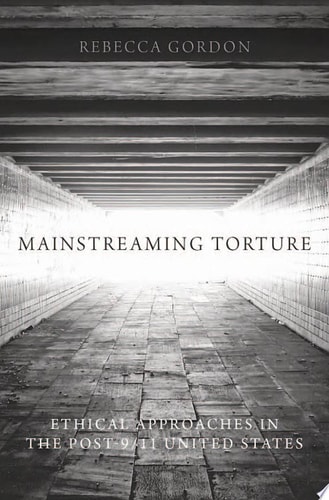
Mainstreaming Torture
0
0
As an Amazon Associate and affiliate partner, Menrva Books earns from qualifying purchases. Learn more
Author Description
The Terrorist Attacks Of September 11, 2001 Reopened What Many People In America Had Long Assumed Was A Settled Ethical Question: Is Torture Ever Morally Permissible? Within Days, Some Began To Suggest That, In These New Circumstances, The New Answer Was Yes. Rebecca Gordon Argues That September 11 Did Not, As Some Have Said, Change Everything, And That Institutionalized State Torture Remains As Wrong Today As It Was On The Day Before Those Terrible Attacks. Furthermore, U.s. Practices During The War On Terror Are Rooted In A History That Began Long Before September 11, A History That Includes Both Support For Torture Regimes Abroad And The Use Of Torture In American Jails And Prisons. Gordon Argues That The Most Common Ethical Approaches To Torture-utilitarianism And Deontology (ethics Based On Adherence To Duty)-do Not Provide Sufficient Theoretical Purchase On The Problem. Both Approaches Treat Torture As A Series Of Isolated Actions That Arise In Moments Of Extremity, Rather Than As An Ongoing, Historically And Socially Embedded Practice. She Advocates Instead A Virtue Ethics Approach, Based In Part On The Work Of Alasdair Macintyre. Such An Approach Better Illumines Torture's Ethical Dimensions, Taking Into Account The Implications Of Torture For Human Virtue And Flourishing. An Examination Of Torture's Effect On The Four Cardinal Virtues-courage, Temperance, Justice, And Prudence (or Practical Reason)-suggests Specific Ways In Which Each Of These Are Deformed In A Society That Countenances Torture. Mainstreaming Torture Concludes With The Observation That If The United States Is To Come To Terms With Its Involvement In Institutionalized State Torture, There Must Be A Full And Official Accounting Of What Has Been Done, And Those Responsible At The Highest Levels Must Be Held Accountable.
Menrva's Summary
THE THESIS
This book investigates whether the institutionalization of state-sanctioned torture in the United States represents a departure from historical norms or a continuation of long-standing practices. Rebecca Gordon, a scholar of ethics and human rights, challenges the notion that the September 11 attacks fundamentally altered the moral landscape regarding torture. She argues that utilitarian and deontological frameworks fail to capture the systemic nature of torture, proposing instead a virtue ethics approach to understand how such practices erode the moral fabric of a society.
THE SCOPE MAP
What You Will Find
- Historical analysis of U.S. involvement in torture regimes and domestic prison practices.
- A critique of utilitarian and deontological ethical frameworks in the context of state violence.
- Application of virtue ethics, specifically the four cardinal virtues of courage, temperance, justice, and prudence.
- A call for official accountability and public reckoning regarding state-sanctioned human rights abuses.
THE AUTHORITY PERSPECTIVE
Experts and readers recognize this work as a rigorous ethical critique that moves beyond standard political commentary to address the philosophical roots of state violence. The text is noted for its accessible yet intellectually dense application of virtue ethics to contemporary human rights issues.
Page Count:
224
Publication Date:
2014-01-01
Publisher:
Oxford University Press
ISBN-10:
019933644X
ISBN-13:
9780199336449
History
Sociology
Human rights
Ethics
Community Tags
Similar Books