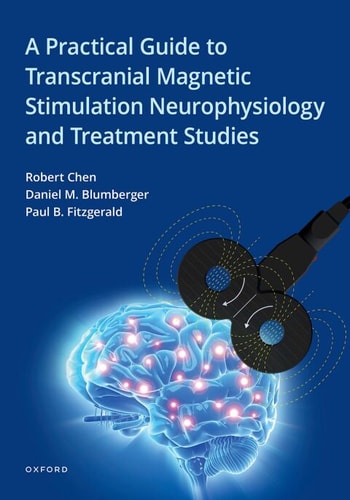
A Practical Guide to Transcranial Magnetic Stimulation Neurophysiology and Treatment Studies
0
0
As an Amazon Associate and affiliate partner, Menrva Books earns from qualifying purchases. Learn more
Author Description
Transcranial magnetic stimulation (TMS) is a widely used non-invasive brain stimulation technique. It represents an exciting new frontier in neuroscience research and can be used to examine neural processes, providing insights into pathophysiology and treating a variety of neuropsychiatric illnesses. A Practical Guide to Transcranial Magnetic Stimulation Neurophysiology and Treatment Studies presents an overview of the use of TMS as both an investigational tool and as treatment for neurological and psychiatric disorders. The chapters include an overview of the history and basic principles of TMS and repetitive TMS (rTMS), the different types of TMS coils, different stimulation approaches, the use of neuronavigation, and safety considerations. The utility of single and paired TMS techniques to measure cortical inhibition, facilitation, connectivity and reactivity in motor and non-motor brain areas, the different methods of using TMS to induce brain plasticity, and use of TMS in cognitive studies are explored. It also covers TMS and rTMS combined with electroencephalography (EEG) in neurophysiological studies. The authors provide a summary of the clinical applications of TMS in neurological and psychiatric disorders including depression, schizophrenia, stroke, Parkinson disease, and pain. This up-to-date volume provides a compendious review of the use of TMS and rTMS that will help guide the utility of this methodology in both clinical and research settings. This practical guide will be a useful resource for those new to the field, as well as experienced users, for both research and clinical settings.
Menrva's Summary
THE THESIS
This volume investigates the clinical and research applications of Transcranial Magnetic Stimulation (TMS) as a non-invasive tool for probing neural processes and treating neuropsychiatric conditions. The authors, Daniel M. Blumberger, Paul B. Fitzgerald, and Robert Chen, synthesize current neurophysiological knowledge to provide a structured framework for both novice practitioners and seasoned researchers. By detailing the technical parameters of stimulation and the underlying pathophysiology of various disorders, the text serves as a comprehensive manual for integrating TMS into clinical practice and experimental design.
THE SCOPE MAP
What You Will Find
- Technical overview of TMS and rTMS principles, including coil types and neuronavigation methods.
- Methodologies for measuring cortical inhibition, facilitation, and brain plasticity.
- Integration of TMS with electroencephalography (EEG) for advanced neurophysiological mapping.
- Clinical application summaries for conditions including depression, schizophrenia, stroke, Parkinson disease, and chronic pain.
THE AUTHORITY PERSPECTIVE
Experts recognize this volume as a foundational resource for understanding the technical and clinical nuances of brain stimulation. Readers frequently note the clarity of the prose, which effectively bridges the gap between complex neurophysiological theory and practical bedside application.
Page Count:
334
Publication Date:
2022-01-01
Publisher:
Oxford University Press
ISBN-10:
0199335869
ISBN-13:
9780199335862
Reference
Allied Health
Neuroscience
Psychiatry
Medical
Neurology
Physiology
Community Tags
Similar Books