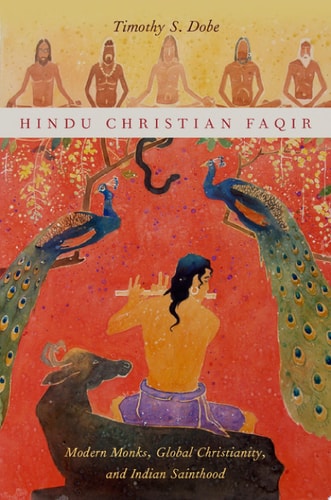
Hindu Christian Faqir: Modern Monks, Global Christianity, and Indian Sainthood
0
0
As an Amazon Associate and affiliate partner, Menrva Books earns from qualifying purchases. Learn more
Author Description
In the mid-nineteenth century, the American missionary James Butler predicted that Christian conversion and British law together would eradicate Indian ascetics. His disgust for Hindu holy men (sadhus), whom he called "saints," "yogis," and "filthy fakirs," was largely shared by orientalist scholars and British officials, who likewise imagined these religious elites to be a leading symptom of India's degeneration. Yet within some thirty years of Butler's writing, modern Indian ascetics such as the neo-Vedantin Hindu Swami Rama Tirtha (1873-1906) and, paradoxically, the Protestant Christian convert Sadhu Sundar Singh (1889-1929) achieved international fame as embodiments of the spiritual superiority of the East over the West. Timothy S. Dobe's fine-grained account of the lives of Sundar Singh and Rama Tirtha offers a window on the surprising reversals and potentials of Indian ascetic "sainthood" in the colonial contact zone. His study develops a new model of Indian holy men that is historicized, religiously pluralistic, and located within the tensions and intersections of ascetic practice and modernity. The first in-depth account of two internationally-recognized modern holy men in the colonially-crucial region of Punjab, Hindu Christian Faqir offers new examples and contexts for thinking through these wider issues. Drawing on unexplored Urdu writings by and about both figures, Dobe argues not only that Hinduism and Protestant Christianity are here intimately linked, but that these links are forged from the stuff of regional Islamic traditions of Sufi holy men (faqir). He also re-conceives Indian sainthood through an in-depth examination of ascetic practice as embodied religion, public performance, and relationship, rather than as a theological, otherworldly, and isolated ideal
Menrva's Summary
THE THESIS
How did the figure of the Indian ascetic evolve from a colonial target of derision into an internationally recognized symbol of spiritual authority? Timothy S. Dobe, a scholar of religion, examines the lives of Swami Rama Tirtha and Sadhu Sundar Singh to challenge traditional narratives of religious isolation. By analyzing their interactions within the colonial contact zone of Punjab, Dobe argues that modern Indian sainthood is a hybrid construct, deeply influenced by regional Islamic Sufi traditions and the tensions of modernity.
THE SCOPE MAP
What You Will Find
- Historical analysis of the colonial perception of Indian ascetics in the mid-nineteenth century.
- Comparative study of the neo-Vedantin Swami Rama Tirtha and the Christian convert Sadhu Sundar Singh.
- Examination of previously unexplored Urdu primary source materials.
- A theoretical framework re-conceiving asceticism as embodied practice, public performance, and social relationship.
THE AUTHORITY PERSPECTIVE
Scholars recognize this work as a significant contribution to the study of colonial-era religious identity and the intersection of Eastern and Western spiritual traditions. Experts highlight the text's rigorous use of vernacular sources to provide a nuanced understanding of how modern sainthood was negotiated in the Punjab region.
Page Count:
363
Publication Date:
2015-01-01
Publisher:
Oxford University Press
ISBN-10:
0199346275
ISBN-13:
9780199346271
Biography
History
Religion
Hinduism
Christianity
Community Tags
Other Editions(2)
Similar Books










Reader Comments
Share Your Thoughts
No comments yet. Be the first to share your thoughts!