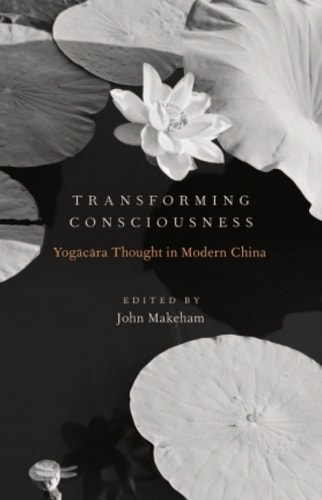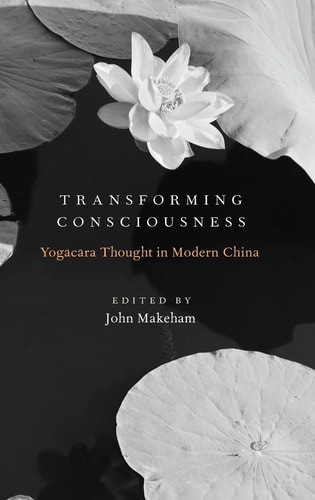
Transforming Consciousness: Yogacara Thought in Modern China
0
0
As an Amazon Associate and affiliate partner, Menrva Books earns from qualifying purchases. Learn more
Author Description
Yogacara is one of the most influential philosophical systems of Indian Buddhism. Competing traditions of Yogacara thought were first introduced into China during the sixth century. By the Yuan dynasty (1271-1368), however, key commentaries of this school had ceased being transmitted in China, and it was not until the end of the nineteenth century that a number of them were re-introduced from Japan where their transmission had been uninterrupted. Within a few short years Yogacara was being touted as a rival to the New Learning from the West, boasting not only organized, systematized thought and concepts, but also a superior means to establish verification.This book accomplishes three goals. The first is to explain why this Indian philosophical system proved to be so attractive to influential Chinese intellectuals at a particular moment in history. The second is to demonstrate how the revival of Yogacara thought informed Chinese responses to the challenges of modernity, in particular modern science and logic. The third goal is to highlight how Yogacara thought shaped a major current in modern Chinese philosophy: New Confucianism. Transforming Consciousness illustrates that an adequate understanding of New Confucian philosophy must include a proper grasp of Yogacara thought.
Menrva's Summary
THE THESIS
This book investigates the historical re-introduction of Yogacara Buddhism into China and its subsequent role in shaping modern Chinese intellectual discourse. John Makeham, a scholar specializing in Chinese intellectual history, utilizes historical records and philosophical texts to argue that Yogacara provided a critical framework for Chinese thinkers to engage with Western science and logic. The text posits that this ancient Indian system was not merely a religious revival but a sophisticated philosophical tool used to navigate the complexities of modernity and influence the development of New Confucianism.
THE SCOPE MAP
What You Will Find
- Historical analysis of the transmission of Yogacara texts from Japan to China during the late nineteenth century.
- Examination of the intersection between Buddhist philosophy and Western scientific methodology.
- Comparative study of Yogacara concepts and their integration into New Confucian thought.
- Evaluation of how Chinese intellectuals utilized Buddhist logic to establish verification systems.
THE AUTHORITY PERSPECTIVE
Experts recognize this work as a significant contribution to the study of modern Chinese intellectual history and the evolution of Buddhist thought in East Asia. Readers frequently note the academic density of the prose, which provides a rigorous examination of how traditional systems adapt to modern challenges.
Page Count:
464
Publication Date:
2014-04-01
Publisher:
Oxford University Press
ISBN-10:
0199358125
ISBN-13:
9780199358120
History
Philosophy
China
Buddhism china
Buddhism
Asian Studies
Confucianism