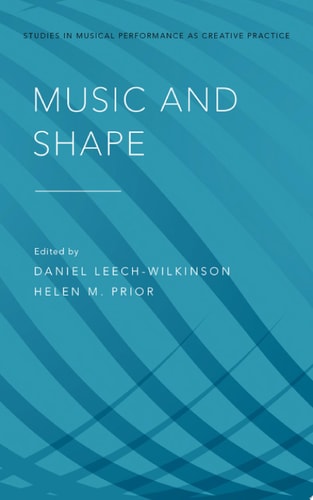
Music And Shape
0
0
As an Amazon Associate and affiliate partner, Menrva Books earns from qualifying purchases. Learn more
Author Description
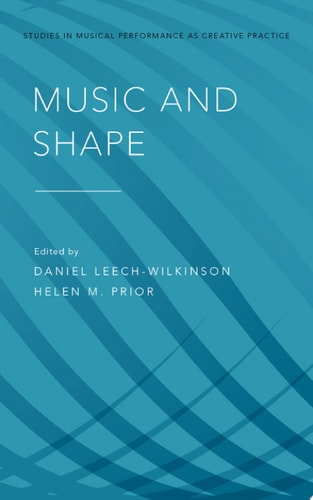
Shape Is A Concept Widely Used In Talk About Music. Musicians In Classical, Popular, Jazz And World Musics Use It To Help Them Rehearse, Teach And Think About What They Do. Yet Why Is A Word That Seems To Require Something To See Or To Touch So Useful To Describe Something That Sounds? Music And Shape Examines Numerous Aspects Of This Surprisingly Close Relationship, With Contributions From Scholars And Musicians, Artists, Dancers, Filmmakers, And Synaesthetes. The Main Chapters Are Provided By Leading Scholars From Music Psychology, Music Analysis, Music Therapy, Dance, Classical, Jazz And Popular Music Who Examine How Shape Makes Sense In Music From Their Varied Points Of View. Here We See Shape Providing A Key Notion For The Teaching And Practice Of Performance Nuance Or Prosody; As A Way Of Making Relationships Between Sound And Body Movement; As A Link Between Improvisational As Well As Compositional Design And Listener Response, And Between Notation, Sound And Cognition; And As A Unimodal Quality Linked To Vitality Affects. Reflections From Practitioners, Between The Chapters, Offer Complementary Insights, Embracing Musical Form, Performance And Composition Styles, Body Movement, Rhythm, Harmony, Timbre, Narrative, Emotions And Feelings, And Beginnings And Endings. Music And Shape Opens Up New Perspectives On Musical Performance, Music Psychology And Music Analysis, Making Explicit And Open To Investigation A Vital Factor In Musical Thinking And Experience Previously Viewed Merely As A Metaphor.
Menrva's Summary
THE THESIS
This book investigates the conceptual utility and cognitive reality of 'shape' as a fundamental descriptor for musical experience and performance. The authors, Daniel Leech-Wilkinson and Helen M. Prior, curate a multidisciplinary collection of essays that move beyond treating shape as a mere metaphor. By integrating perspectives from music psychology, analysis, therapy, and various performance arts, the text argues that shape serves as a critical bridge between auditory perception, physical movement, and compositional intent.
THE SCOPE MAP
What You Will Find
- Interdisciplinary analysis of musical shape across classical, jazz, and world music traditions.
- Methodologies for linking sound to body movement, prosody, and performance nuance.
- Case studies examining the intersection of notation, cognition, and listener response.
- Practitioner reflections on structural elements including rhythm, harmony, timbre, and narrative arc.
THE AUTHORITY PERSPECTIVE
Experts recognize this collection as a significant contribution to the field of music cognition, particularly for its effort to formalize a concept often relegated to informal discourse. Scholars frequently note that the text provides a necessary framework for researchers and performers looking to bridge the gap between abstract musical theory and embodied experience.
Page Count:
352
Publication Date:
2017-01-01
Publisher:
Oxford University Press
ISBN-10:
0199351430
ISBN-13:
9780199351435
Music
Musicology
Music
Performance Studies
Music theory