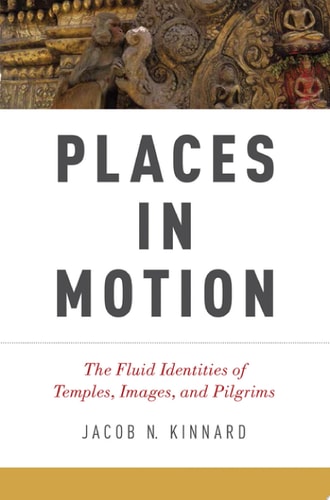
Places in Motion
0
0
As an Amazon Associate and affiliate partner, Menrva Books earns from qualifying purchases. Learn more
Author Description
Jacob Kinnard Offers An In-depth Examination Of The Complex Dynamics Of Religiously Charged Places. Focusing On Several Important Shared And Contested Pilgrimage Places-ground Zero And Devils Tower In The United States, Ayodhya And Bodhgaya In India, Karbala In Iraq-he Poses A Number Of Crucial Questions. What And Who Has Made These Sites Important, And Why? How Are They Shared, And How And Why Are They Contested? What Is At Stake In Their Contestation? How Are The Particular Identities Of Place And Space Established? How Are Individual And Collective Identity Intertwined With Space And Place? Challenging Long-accepted, Clean Divisions Of The Religious World, Kinnard Explores Specific Instances Of The Vibrant Messiness Of Religious Practice, The Multivocality Of Religious Objects, The Fluid And Hybrid Dynamics Of Religious Places, And The Shifting And Tangled Identities Of Religious Actors. He Contends That Sacred Space Is A Constructed Idea: Places Are Not Sacred In And Of Themselves, But Are Sacred Because We Make Them Sacred. As Such, They Are In Perpetual Motion, Transforming Themselves From Moment To Moment And Generation To Generation. Places In Motion Moves Comfortably Across And Between A Variety Of Historical And Cultural Settings As Well As Academic Disciplines, Providing A Deft And Sensitive Approach To The Topic Of Sacred Places, With Awareness Of Political, Economic, And Social Realities As These Exist In Relation To Questions Of Identity. It Is A Lively And Much Needed Critical Advance In Analytical Reflections On Sacred Space And Pilgrimage.
Menrva's Summary
THE THESIS
This book investigates the core question of how and why specific geographic locations become designated as sacred and how these sites maintain or lose that status through human interaction. Jacob N. Kinnard, a scholar of religious studies, utilizes a multidisciplinary framework to examine the intersection of space, identity, and religious practice. He argues that sacredness is not an inherent quality of a location but a social construct that is constantly negotiated, contested, and transformed by the individuals and groups who inhabit or visit these spaces. By analyzing diverse global sites, he demonstrates that religious places are fluid, hybrid, and perpetually in motion.
THE SCOPE MAP
What You Will Find
- Comparative analysis of contested pilgrimage sites including Ground Zero, Devils Tower, Ayodhya, Bodhgaya, and Karbala.
- A theoretical framework for understanding the multivocality of religious objects and the construction of sacred space.
- Examination of the relationship between individual identity, collective identity, and physical geography.
- Discussion of the political, economic, and social realities that influence the perception and management of sacred sites.
THE AUTHORITY PERSPECTIVE
Scholars and students of religious studies frequently cite this work for its ability to bridge the gap between abstract theory and concrete, real-world examples of religious conflict. Experts highlight the text as a valuable contribution to the study of sacred space, noting its success in challenging static definitions of religious geography.
Page Count:
320
Publication Date:
2014-01-01
Publisher:
Oxford University Press
ISBN-10:
0199359679
ISBN-13:
9780199359677
Religion
Geography
Sociology
Anthropology
Community Tags
Similar Books