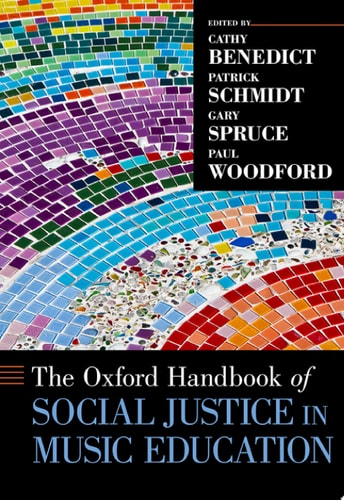
The Oxford Handbook Of Social Justice In Music Education
0
0
As an Amazon Associate and affiliate partner, Menrva Books earns from qualifying purchases. Learn more
Author Description
Music Education Has Historically Had A Tense Relationship With Social Justice. One The One Hand, Educators Concerned With Music Practices Have Long Preoccupied Themselves With Ideas Of Open Participation And The Potentially Transformative Capacity That Musical Interaction Fosters. On The Other Hand, They Have Often Done So While Promoting And Privileging A Particular Set Of Musical Practices, Traditions, And Forms Of Musical Knowledge, Which Has In Turn Alienated And Even Excluded Many Children From Music Education Opportunities. The Oxford Handbook Of Social Justice In Music Education Provides A Comprehensive Overview And Scholarly Analyses Of The Major Themes And Issues Relating To Social Justice In Musical And Educational Practice Worldwide. The First Section Of The Handbook Conceptualizes Social Justice While Framing Its Pursuit Within Broader Contexts And Concerns. Authors In The Succeeding Sections Of The Handbook Fill Out What Social Justice Entails For Music Teaching And Learning In The Home, School, University, And Wider Community As They Grapple With Cycles Of Injustice That Might Be Perpetuated By Music Pedagogy. The Concluding Section Of The Handbook Offers Specific Practical Examples Of Social Justice In Action Through A Variety Of Educational And Social Projects And Pedagogical Practices That Will Inspire And Guide Those Wishing To Confront And Attempt To Ameliorate Musical Or Other Inequity And Injustice. Consisting Of 42 Chapters By Authors From Across The Globe, The Handbook Will Be Of Interest To Anyone Who Wishes To Better Understand What Social Justice Is And Why Its Pursuit In And Through Music Education Matters.
Menrva's Summary
THE THESIS
This handbook investigates the complex, often contradictory relationship between music education and the pursuit of social justice within global pedagogical frameworks. The editors, Cathy Benedict, Patrick K. Schmidt, Paul Woodford, and Gary Spruce, curate a collection of 42 scholarly chapters that examine how music instruction can either perpetuate systemic exclusion or serve as a catalyst for equity. By analyzing historical practices and contemporary teaching methods, the contributors provide a rigorous framework for understanding how educators can identify and dismantle barriers to musical participation across diverse institutional settings.
THE SCOPE MAP
What You Will Find
- Theoretical conceptualizations of social justice within the specific context of musical instruction.
- Analyses of pedagogical practices across home, school, university, and community environments.
- Case studies detailing practical applications of social justice initiatives in real-world educational projects.
- Critical examinations of how traditional music curricula have historically alienated specific student populations.
THE AUTHORITY PERSPECTIVE
Experts identify this volume as a foundational academic resource for music educators and researchers seeking to integrate equity-based practices into their curricula. Readers frequently note the academic density of the prose, which serves as a comprehensive reference for those studying the intersection of musicology and social reform.
Page Count:
544
Publication Date:
2015-01-01
Publisher:
Oxford University Press
ISBN-10:
0199356165
ISBN-13:
9780199356164
Music
Pedagogy
Sociology
Education
Social justice
Community Tags
Other Editions(2)
Similar Books









Reader Comments
Share Your Thoughts
No comments yet. Be the first to share your thoughts!