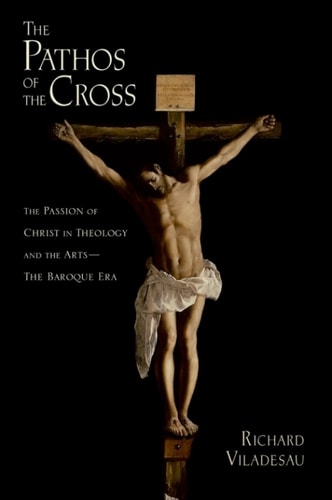
The Pathos of the Cross: The Passion of Christ in Theology and the Arts - The Baroque Era
0
0
As an Amazon Associate and affiliate partner, Menrva Books earns from qualifying purchases. Learn more
Author Description
The Baroque period was in some senses the beginning of modern Western scientific and intellectual culture-the early budding of the Enlightenment. In the light of a new scientific and historical consciousness, it saw the rise of deism and the critique of traditional forms of Christianity. Secular values and institutions were openly or surreptitiously replacing the structures of traditional Christian society. At the same time, there was also a trend of religious renewal and the reaffirmation of tradition. In Roman Catholicism, the Patristic, medieval, and Tridentine paradigms were subsumed into a powerful Counter-Reformation spirituality, propagated not only in books, treatises, and sermons, but also in music and in the works of what was arguably the last period of great sacred art. It inspired masters like Bernini, Reni, Rubens, Velázquez, Zurbarán, and Van Dyck. In the Protestant traditions, the Reformation movement found affective expression in new forms of music produced by Monteverdi, Scarlatti, Handel, Telemann, and Bach. The title, The Pathos of the Cross, points to a major aspect of the spirituality of this period: a dramatic portrayal of the events of Christ's passion meant to provoke an emotional response from the viewer and listener. Many works of the period retain their emotional pull centuries later, even though the theology they represent has been challenged and frequently rejected. This volume traces the ways in which Roman Catholic and Protestant theologies of the period proclaimed the centrality of the cross of Christ to human salvation. In a parallel movement, it illustrates how musical and artistic works of the period were both inspired and informed by these theologies, and how they moved beyond them in an aesthetic mediation of faith.
Menrva's Summary
THE THESIS
This volume investigates how the theological emphasis on the passion of Christ during the Baroque era informed and was mediated through the period's significant artistic and musical achievements. Richard Viladesau, a scholar of theology and the arts, utilizes a multidisciplinary approach to examine the intersection of Counter-Reformation spirituality, Protestant reform movements, and the aesthetic output of the 17th and 18th centuries. He argues that the dramatic portrayal of the cross served as a primary vehicle for both religious instruction and emotional engagement in a society transitioning toward modern scientific consciousness.
THE SCOPE MAP
What You Will Find
- Analysis of theological paradigms including Patristic, medieval, and Tridentine influences on Baroque spirituality.
- Examination of visual art masters such as Bernini, Rubens, Velázquez, and Van Dyck.
- Evaluation of musical compositions by figures including Monteverdi, Handel, and Bach.
- Discussion of the tension between traditional Christian dogma and the emerging intellectual shifts of the Enlightenment.
THE AUTHORITY PERSPECTIVE
Scholars and students of religious aesthetics frequently cite this work for its ability to bridge the gap between complex theological treatises and the sensory experience of Baroque art. It is regarded as a foundational text for understanding how the visual and auditory culture of the period functioned as a form of theological communication.
Page Count:
368
Publication Date:
2014-01-01
Publisher:
Oxford University Press
ISBN-10:
0199352690
ISBN-13:
9780199352692
Religion
Music History
Humanities
Theology
Baroque
Christianity
Subjects & Themes
Art History
Community Tags
Other Editions(2)
Similar Books
Reader Comments
Share Your Thoughts
No comments yet. Be the first to share your thoughts!