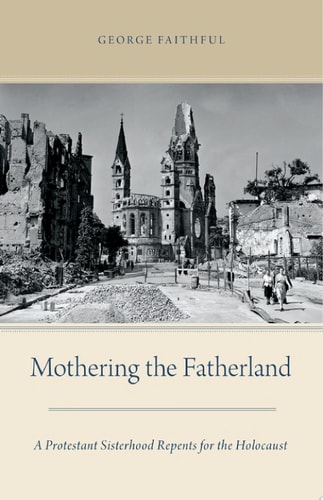
Mothering the Fatherland: A Protestant Sisterhood Repents for the Holocaust
0
0
As an Amazon Associate and affiliate partner, Menrva Books earns from qualifying purchases. Learn more
Author Description
How should one respond, personally or theologically, to genocide committed on one's behalf? After the Allied bombing of Darmstadt, Germany, in 1944, some Lutheran young women perceived their city's destruction as an expression of God's wrath-a punishment for Hitler's murder of six million Jews, purportedly on behalf of the German people.George Faithful tells the story of a number of these young women, who formed the Ecumenical Sisterhood of Mary in 1947 in order to embrace lives of radical repentance for the sins of the German people against God and against the Jews. Under Mother Basilea Schlink, the sisters embraced an ideology of collective national guilt. According to Schlink, a handful of true Christians were called to lead their nation in repentance, interceding and making spiritual sacrifices as priests on its behalf and saving it from looming destruction. Schlink explained that these ideas were rooted in her reading of the Hebrew Bible; in fact, Faithful discovers, they also bore the influence of German nationalism. Schlink's vision resulted in penitential practices that dominated the life of her community.While the women of the sisterhood were subject to each other, they elevated themselves and their spiritual authority above that of any male leaders. They offered female and gender-neutral paradigms of self-sacrifice as normative for all Christians. Mothering the Fatherland shows how the sisters overturned German Protestant norms for gender roles, communal life, and nationalism in their pursuit of redemption.
Menrva's Summary
THE THESIS
This book investigates how the Ecumenical Sisterhood of Mary navigated the theological and personal burden of national guilt following the Holocaust. Author George Faithful, a scholar of religion, utilizes archival research and historical analysis to examine how these Lutheran women interpreted the destruction of Darmstadt as divine judgment, leading them to adopt radical practices of repentance and intercession on behalf of the German nation.
THE SCOPE MAP
What You Will Find
- Historical analysis of the Ecumenical Sisterhood of Mary founded in 1947.
- Examination of the intersection between Hebrew Bible theology and German nationalism.
- Case studies on the leadership of Mother Basilea Schlink and her influence on communal penitential practices.
- Exploration of how the sisterhood challenged traditional gender roles and ecclesiastical authority within German Protestantism.
THE AUTHORITY PERSPECTIVE
Scholars and historians recognize this work as a significant contribution to the study of post-war German religious movements and the gendered dimensions of theological repentance. Readers frequently note the academic rigor of the text and its success in contextualizing the sisterhood's radical practices within the broader landscape of 20th-century European history.
Page Count:
304
Publication Date:
2014-01-01
Publisher:
Oxford University Press
ISBN-10:
0199363471
ISBN-13:
9780199363476
Religion
History
Christianity
Jewish History
Germany
European History
Genocide
Responsibility
Guilt
Gender Studies
Holocaust
Repentance
Community Tags
Similar Books