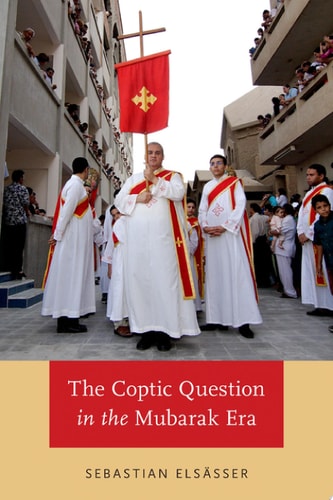
The Coptic Question in the Mubarak Era
0
0
As an Amazon Associate and affiliate partner, Menrva Books earns from qualifying purchases. Learn more
Author Description
Egypt's Christians, the Copts, are the largest Christian community in the Middle East. While they have always been considered an integral component of the Egyptian nation, their precise status within Egyptian politics and society has been subject to ongoing debates from the twentieth century to present day. Part of the legacy of the Mubarak era in Egypt is the unsettled state of Muslim-Christian relations and the increasing volatility of sectarian tensions, which have continued in the post-Mubarak period.The Coptic Question in the Mubarak Era delves into the discourses that dominated public debates and the political agenda-setting during the Mubarak era, explaining why politicians and the public in Egypt have had such enormous difficulties in recognizing the real roots of sectarian strife. This "Coptic question" is a complex set of issues, ranging from the petty struggles of daily Egyptian life in a bi-religious society to intricate legal and constitutional questions (family law, conversion, and church-building), to the issue of the political participation of the Coptic minority. Through these subjects, the book explores a larger debate around Egyptian national identity.Paying special attention to the neglected diversity of voices within the Coptic community, Sebastian Elsässer peels back the historical layers to provide a comprehensive analysis of the historic, political, and social dynamics of Egypt's Coptic Christians during Hosni Mubarak's rule.
Menrva's Summary
THE THESIS
This book investigates the complex socio-political status of the Coptic Christian minority in Egypt and the persistent sectarian tensions that characterized the Mubarak era. Sebastian Elsässer, a scholar of Middle Eastern politics, utilizes a rigorous analysis of public discourse and political agenda-setting to examine why Egyptian society struggled to address the root causes of inter-religious conflict. The work argues that the 'Coptic question' is inextricably linked to broader, unresolved debates regarding the definition of Egyptian national identity and the state's approach to minority rights.
THE SCOPE MAP
What You Will Find
- Analysis of legal and constitutional challenges including family law, religious conversion, and church construction regulations.
- Examination of political participation and representation of the Coptic minority within the Mubarak-era state apparatus.
- Investigation into the diverse and often conflicting perspectives held by various factions within the Coptic community itself.
- Evaluation of the historical and social dynamics that fueled sectarian volatility from the twentieth century through the post-Mubarak transition.
THE AUTHORITY PERSPECTIVE
Experts recognize this work as a significant contribution to the study of modern Egyptian politics and minority relations. Readers frequently note the academic density of the prose and the author's meticulous attention to the nuances of internal Coptic discourse.
Page Count:
336
Publication Date:
2014-01-01
Publisher:
Oxford University Press
ISBN-10:
0199368406
ISBN-13:
9780199368402
History
Religion
Coptic Church
Islam
Sociology
Egypt
Christianity and other religions
Middle Eastern
Church History
Copts
Community Tags
Similar Books