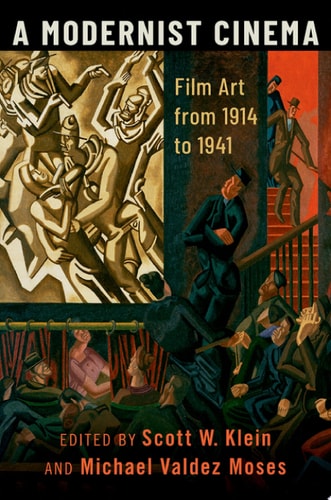
A Modernist Cinema: Film Art from 1914 to 1941
0
0
As an Amazon Associate and affiliate partner, Menrva Books earns from qualifying purchases. Learn more
Author Description
In A Modernist Cinema, sixteen distinguished scholars in the field of the New Modernist Studies explore the interrelationships among modernism, cinema, and modernity. Focusing on several culturally influential films from Europe, America, and Asia produced between 1914 and 1941, this collection of essays contends that cinema was always a modernist enterprise.Examining the dialectical relationship between a modernist cinema and modernity itself, these essays reveal how the movies represented and altered our notions and practices of modern life, as well as how the so-called crises of modernity shaped the evolution of filmmaking. Attending to the technical achievements and formal qualities of the works of several prominent directors - Giovanni Pastrone, D. W. Griffith, Sergei Eisenstein, Fritz Lang, Alfred Hitchcock, F. W. Murnau, Carl Theodore Dreyer, Dziga Vertov, Luis Buñuel, Yasujiro Ozu, John Ford, Jean Renoir, Charlie Chaplin, Leni Riefenstahl, and Orson Welles - these essays investigate several interrelated topics: how a modernist cinema represented and intervened in the political and social struggles of the era; the ambivalent relationship between cinema and the other modernist arts; the controversial interconnection between modern technology and the new art of filmmaking; the significance of representing the mobile human body in a new medium; the gendered history of modernity; and the transformative effects of cinema on modern conceptions of temporality, spatial relations, and political geography.
Menrva's Summary
THE THESIS
This collection of essays investigates the fundamental argument that cinema functioned as a primary modernist enterprise between 1914 and 1941. Edited by Michael Valdez Moses and Scott W. Klein, the volume gathers sixteen scholars to analyze how film both reflected and actively shaped the crises and transformations of modernity. By examining the formal and technical innovations of seminal directors, the authors demonstrate how the medium of film redefined human perceptions of time, space, and social identity during the early twentieth century.
THE SCOPE MAP
What You Will Find
- Analysis of influential films from Europe, America, and Asia produced between 1914 and 1941.
- Critical examination of directors including Sergei Eisenstein, Fritz Lang, Alfred Hitchcock, and Yasujiro Ozu.
- Exploration of the intersection between cinematic technology and the broader modernist arts.
- Investigation into the representation of the human body, gendered history, and political geography within early film.
THE AUTHORITY PERSPECTIVE
Scholars and students of film history identify this collection as a significant contribution to New Modernist Studies. Readers frequently note the academic density of the prose, which provides a rigorous framework for understanding the dialectical relationship between early cinema and the modern era.
Page Count:
332
Publication Date:
2021-10-22
Publisher:
Oxford University Press
ISBN-10:
0199379459
ISBN-13:
9780199379453
Cinema History
Modernism
Modernism aesthetics
Art History
Motion pictures
Film Studies
Community Tags
Similar Books