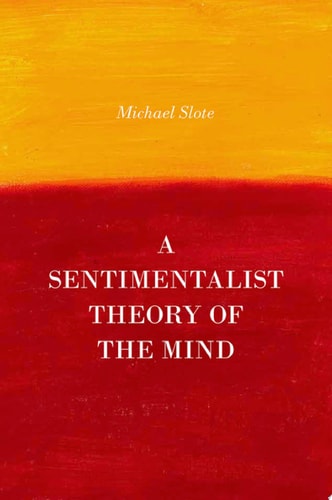
A Sentimentalist Theory of the Mind
0
0
As an Amazon Associate and affiliate partner, Menrva Books earns from qualifying purchases. Learn more
Author Description
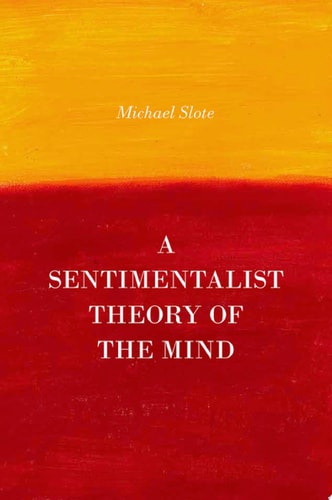
Michael Slote argues that emotion is involved in all human thought and action on conceptual grounds, rather than merely being causally connected with other aspects of the mind. This kind of general sentimentalism about the mind goes beyond that advocated by Hume, and the book's main arguments are only partially anticipated in German Romanticism and in the Chinese philosophical tendency to avoid rigid distinctions between thought and emotion. The new sentimentalist philosophy of mind Slote proposes can solve important problems about the nature of belief and action that other approaches -- including Pragmatism -- fail to address. In arguing for the centrality of emotion within philosophy of the mind, A Sentimentalist Theory of the Mind continues the critique of rationalist philosophical views that began with Slote's Moral Sentimentalism (OUP, 2010) and continued in his From Enlightenment to Receptivity (OUP, 2013). This new book also delves into what is distinctive about human minds, arguing that there is a greater variety to ordinary human motives than has been recognized and that emotions play a central role in this complex psychology.
Menrva's Summary
THE THESIS
This work investigates whether emotion functions as a fundamental component of all human thought and action rather than merely acting as a causal byproduct. Michael Slote, a prominent philosopher, utilizes a conceptual framework to challenge traditional rationalist models of the mind. By drawing on historical philosophical traditions and contemporary psychological observations, he argues that a sentimentalist approach provides a more robust explanation for human belief and motivation than existing alternatives like Pragmatism.
THE SCOPE MAP
What You Will Find
- A conceptual analysis of the integration between emotional states and cognitive processes.
- A critique of rationalist philosophical traditions regarding the nature of belief.
- Comparative analysis between Western rationalism, German Romanticism, and Chinese philosophical perspectives.
- A proposed model for understanding the variety and complexity of human motives.
THE AUTHORITY PERSPECTIVE
Scholars and students of philosophy frequently identify this text as a significant extension of Slote’s ongoing project to reorient moral and cognitive theory. Experts note that the prose is dense and requires a strong background in analytic philosophy to fully grasp the nuances of his sentimentalist arguments.
Page Count:
274
Publication Date:
2014-01-01
Publisher:
Oxford University Press
ISBN-10:
0199371768
ISBN-13:
9780199371761
Psychology
Philosophy
Non-Fiction
Ethics
Mind & Body