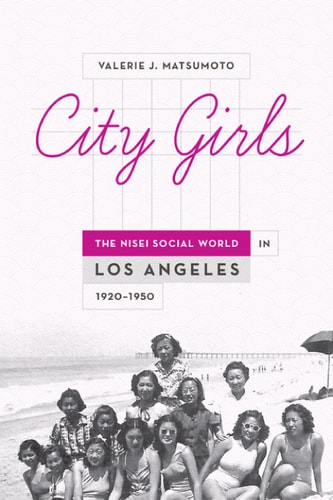
City Girls: The Nisei Social World in Los Angeles, 1920-1950
0
0
As an Amazon Associate and affiliate partner, Menrva Books earns from qualifying purchases. Learn more
Author Description
Even before wartime incarceration, Japanese Americans largely lived in separate cultural communities from their West Coast neighbors. Although the Nisei children, the American-born second generation, were U.S. citizens and were integrated in public schools, they were socially isolated in many ways from their peers. These young women found rapport in ethnocultural youth organizations, a forgotten world of female friendship and camaraderie that Valerie J. Matsumoto recovers in this book.Through extensive networks of social clubs, young Japanese American women competed in sports, socialized with young men, and forged enduring friendships. During the 1920s and 1930s, Nisei girls' organizations flourished in Los Angeles, then home to the largest Japanese American population. In clubs with names such as the Junior Misses and Tartanettes, girls gained leadership training, took part in community service, found jobs, and enjoyed beach outings and parties. Often sponsored by the YWCA, Buddhist temples, and Christian churches, these groups served as a bulwark against racial discrimination, offering a welcoming space that helped young women navigate between parental expectations and the lure of popular culture. Indeed, their dances, meetings, and athletic events filled the social calendars in the ethnic press. As cultural mediators and ethnic representatives, these urban teenagers bridged the cultures of the Japanese American community and mainstream society, whether introducing new foods, holidays, and rituals into the home or dancing in kimono at civic events. Some expressed themselves as poets, writers, and journalists and took leading roles in the development of a Nisei literary network. Women's organizing skills and work would prove critical to the support of their families during World War II incarceration and community rebuilding in the difficult years of resettlement. By bringing to life a dynamic and long-lasting world of friendship circles and clubs, City Girls highlights the resilience and agency of these young women.
Menrva's Summary
THE THESIS
This book investigates how Nisei women in Los Angeles navigated the intersection of ethnic identity and American popular culture through the formation of social organizations between 1920 and 1950. Valerie J. Matsumoto, a professor of history and Asian American studies, utilizes extensive archival research and oral histories to document the lives of second-generation Japanese American women. She argues that these social clubs provided essential support networks that allowed young women to reconcile traditional parental expectations with their own aspirations, ultimately fostering leadership skills that proved vital during the period of wartime incarceration and subsequent community rebuilding.
THE SCOPE MAP
What You Will Find
- Historical analysis of the Nisei social landscape in Los Angeles from 1920 to 1950.
- Examination of the role of YWCA, Buddhist temples, and Christian churches in sponsoring youth organizations.
- Evidence derived from ethnic press archives, personal correspondence, and oral history interviews.
- Exploration of the dual role of Nisei women as cultural mediators between immigrant families and mainstream American society.
THE AUTHORITY PERSPECTIVE
Scholars and historians recognize this work as a foundational text for understanding the gendered dimensions of the Japanese American experience in the early twentieth century. Readers frequently note the meticulous archival detail and the author's ability to humanize the sociological shifts occurring within the Nisei community.
Page Count:
308
Publication Date:
2014-01-01
Publisher:
Oxford University Press
ISBN-10:
0199377049
ISBN-13:
9780199377046
History
Cultural History
Sociology
American History
Los Angeles
Community Tags
Other Editions(2)

Similar Books















Reader Comments
Share Your Thoughts
No comments yet. Be the first to share your thoughts!