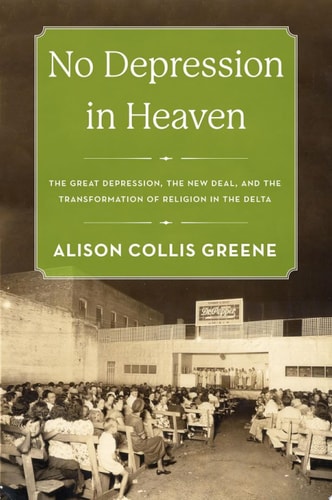
No Depression in Heaven: The Great Depression, the New Deal, and the Transformation of Religion in the Delta
0
0
As an Amazon Associate and affiliate partner, Menrva Books earns from qualifying purchases. Learn more
Author Description
In No Depression in Heaven, Alison Collis Greene demonstrates how the Great Depression and New Deal transformed the relationship between church and state. Grounded in Memphis and the Delta, this book traces the collapse of voluntarism, the link between southern religion and the New Deal, and the gradual alienation of conservative Christianity from the state. At the start of the Great Depression, churches and voluntary societies provided the only significant source of aid for those in need in the South. Limited in scope, divided by race, and designed to control the needy as much as to support them, religious aid collapsed under the burden of need in the early 1930s. Hungry, homeless, and out-of-work Americans found that they had nowhere to turn at the most desolate moment of their lives. Religious leaders joined a chorus of pleas for federal intervention in the crisis and a permanent social safety net.They celebrated the New Deal as a religious triumph. Yet some complained that Franklin Roosevelt cut the churches out of his programs and lamented their lost moral authority. Still others found new opportunities within the New Deal. By the late 1930s, the pattern was set for decades of religious and political realignment.More than a study of religion and politics, No Depression in Heaven uncovers the stories of men and women who endured the Depression and sought in their religious worlds the spiritual resources to endure material deprivation. Its characters are rich and poor, black and white, mobile sharecroppers and wealthy reformers, enamored of the federal government and appalled by it. Woven into this story of political and social transformation are stories of southern men and women who faced the greatest economic disaster of the twentieth century and tried to build a better world than the one they inhabited.
Menrva's Summary
THE THESIS
This book investigates how the economic catastrophe of the Great Depression and the subsequent implementation of the New Deal fundamentally altered the relationship between religious institutions and the American state. Alison Collis Greene, a scholar of American religious history, utilizes archival research and local case studies from Memphis and the Mississippi Delta to document this shift. She argues that the failure of private religious charity to address widespread poverty forced a transition toward federal intervention, which in turn sparked a long-term political and religious realignment. The work examines how both clergy and laypeople navigated the tension between traditional voluntarism and the emerging social safety net.
THE SCOPE MAP
What You Will Find
- Analysis of the collapse of private religious charity during the early 1930s.
- Examination of the intersection between Southern religious identity and federal New Deal policies.
- Primary source accounts from diverse populations including sharecroppers, reformers, and religious leaders.
- Documentation of the shifting moral authority of churches in the face of state-sponsored welfare programs.
THE AUTHORITY PERSPECTIVE
Historians recognize this work as a significant contribution to the study of Southern religious and political history during the twentieth century. Scholars frequently note the author's ability to synthesize macro-level political shifts with the lived experiences of individuals in the Mississippi Delta.
Page Count:
335
Publication Date:
2015-01-01
Publisher:
Oxford University Press
ISBN-10:
019937189X
ISBN-13:
9780199371891
History
Religion
American History
United States
Social change
Social Conditions
Memphis tenn history
Political History
Social History
Community Tags
Similar Books