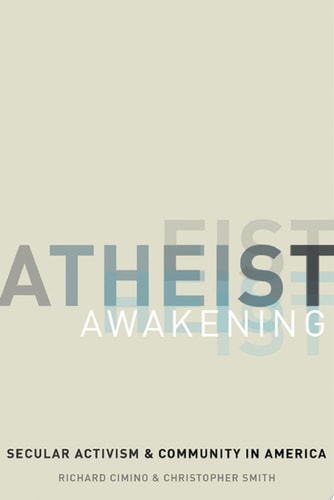
Atheist Awakening
0
0
As an Amazon Associate and affiliate partner, Menrva Books earns from qualifying purchases. Learn more
Author Description
Surveys Over The Last Twenty Years Have Seen An Ever-growing Number Of Americans Disclaim Religious Affiliations And Instead Check The None Box. In The First Sociological Exploration Of Organized Secularism In America, Richard Cimino And Christopher Smith Show How One Segment Of These Nones Have Created A New, Cohesive Atheist Identity Through Activism And The Creation Of Communities. According To Cimino And Smith, The New Upsurge Of Atheists Is A Reaction To The Revival Of Religious Fervor In American Politics Since 1980. Feeling Overlooked And Underrepresented In The Public Sphere, Atheists Have Employed A Wide Variety Of Strategies-some Evangelical, Some Based On Identity Politics-to Defend And Assert Themselves Against Their Ideological Opponents. These Strategies Include Building And Maintaining Communities, Despite The Absence Of The Kinds Of Shared Rituals, Texts, And Laws That Help To Sustain Organized Religions. Drawing On In-depth Interviews With Self-identified Atheist, Secularist, And Humanist Leaders And Activists, As Well As Extensive Observations And Analysis Of Secular Gatherings And Media, Cimino And Smith Illustrate How Atheists Organize And Align Themselves Toward Common Goals, And How Media-particularly Web-based Media-have Proven Invaluable In Connecting Atheists To One Another And In Creating A Powerful Virtual Community. Cimino And Smith Suggest That Secularists Rely Not Only On The Internet For Community-building, But On Their Own New Forms Of Ritual. This Groundbreaking Study Will Be Essential Reading For Anyone Seeking To Understand The Growing Atheist Movement In America.
Menrva's Summary
THE THESIS
This book investigates the emergence of a cohesive, organized atheist identity in the United States as a direct response to the rise of religious influence in American politics since 1980. Authors Richard P. Cimino and Christopher W. J. Smith, both scholars of sociology and religion, utilize a framework of identity politics and social movement theory to analyze how secular individuals navigate a public sphere they perceive as hostile. By examining the transition from individual disbelief to collective activism, the authors argue that atheists have successfully constructed community structures that mirror traditional religious organizations despite lacking shared theological texts or rituals.
THE SCOPE MAP
What You Will Find
- A sociological analysis of the 'None' demographic in American religious surveys over the past two decades.
- An examination of the role of web-based media and digital platforms in fostering virtual secular communities.
- Qualitative data derived from in-depth interviews with prominent atheist, secularist, and humanist leaders.
- A study of the specific strategies used by secular groups to assert their presence in the public sphere and defend against ideological opposition.
THE AUTHORITY PERSPECTIVE
Experts in the sociology of religion identify this work as a foundational text for understanding the organizational mechanics of contemporary American secularism. Readers frequently note the academic rigor of the research, which provides a balanced view of how non-religious groups adapt traditional community-building strategies to fit a secular framework.
Page Count:
224
Publication Date:
2014-01-01
Publisher:
Oxford University Press
ISBN-10:
0199392927
ISBN-13:
9780199392926
Politics
Religion
Sociology
American Studies
Atheism
Secularism
Community Tags
Similar Books