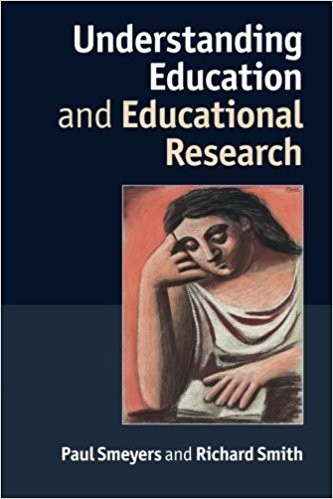
Understanding Education and Educational Research
0
0
As an Amazon Associate and affiliate partner, Menrva Books earns from qualifying purchases. Learn more
Author Description
Educational research is widely believed to be essentially empirical, consisting mainly of collecting and analysing data, with randomised control trials as the 'gold standard'. This book argues that good educational research is often philosophical in nature. Offering a critical overview of the current state of educational research, the authors argue that there are two factors in particular that distort it. One is that throughout the world it is expected to serve the interests of the state in securing educational improvements, as measured by standardised examination results, and to demonstrate 'scientific' credentials sufficient to guarantee absence of ideological bias and carry conviction. The other is that learning to do educational research is generally seen as a matter of being trained in empirical 'research methods'. The authors demonstrate, by contrast, that good educational research needs the rigorous thinking characteristic of philosophy, and that philosophical treatments themselves sometimes constitute such research
Menrva's Summary
THE THESIS
This book challenges the prevailing empirical view of educational research by asserting the critical role of philosophy. The authors contend that educational research is often distorted by state interests focused on standardized test results and the demand for 'scientific' credentials, as well as by a training emphasis solely on empirical methods. They argue that genuine educational research requires the rigorous analytical thinking characteristic of philosophy, and that philosophical inquiry itself can constitute such research.
THE SCOPE MAP
- Critique of the empirical dominance in educational research.
- Analysis of state interests and their influence on research.
- Examination of the 'scientific' credentials demanded of research.
- Argument for the necessity of philosophical rigor in educational research.
- Discussion of how philosophical treatments can constitute research.
- Overview of the current state of educational research globally.
THE AUTHORITY PERSPECTIVE
This work is likely to be of interest to academics and researchers in education and philosophy who are critical of current research paradigms. The authors' focus on philosophical underpinnings suggests a text that engages with theoretical debates rather than practical application. Its argument for the value of philosophical thinking in a field often dominated by empirical methods positions it as a contribution to methodological discourse.
Page Count:
221
Publication Date:
2014-01-01
ISBN-10:
1107401615
ISBN-13:
9781107401617
Philosophy
Non-Fiction
Psychology
Education
Research Methods
Community Tags
Similar Books