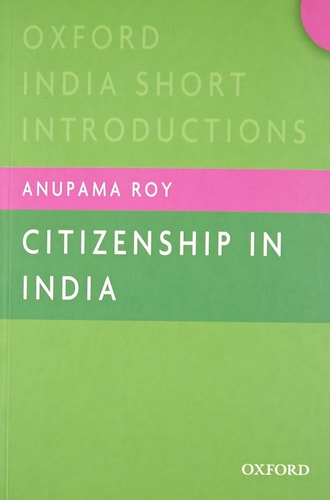
Citizenship in India
0
0
As an Amazon Associate and affiliate partner, Menrva Books earns from qualifying purchases. Learn more
Author Description
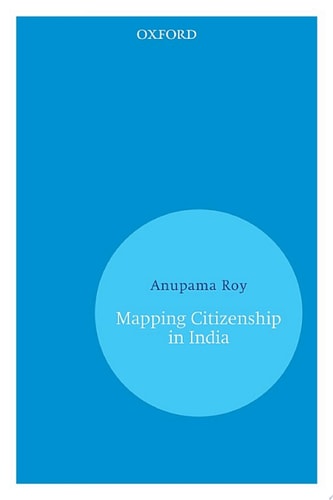
The idea of citizenship goes beyond a legal-formal framework to denote substantive membership in the political community. While citizenship is identified with an ideal condition of equality of status and belonging, it gets challenged in societies marked by inequalities. As an idea that inspires struggle, citizenship remains an institution that is unbounded, changing, and always incomplete. This short introduction lucidly describes the history of citizenship in India, before moving on to the pluralities and the contemporary landscapes of citizenship. It traces the amendments in the Citizenship Act, 1955 and argues that the legal enframing of the citizen involves a simultaneous production of its other-the non-citizen. This book looks at the multiple margins that constitute the sites of constant churnings, releasing powerful new idioms, imaginaries, and practices of citizenship.
Menrva's Summary
THE THESIS
This book investigates the complex evolution of citizenship in India, examining how it functions as both a legal framework and a site of political struggle. Anupama Roy, a scholar of political science, utilizes historical analysis and legal review to argue that the definition of the Indian citizen is inextricably linked to the creation of the non-citizen. The text provides a framework for understanding how citizenship remains an incomplete and constantly shifting institution within a society defined by deep-seated inequalities.
THE SCOPE MAP
What You Will Find
- Historical overview of citizenship development in India
- Analysis of the Citizenship Act, 1955 and its subsequent amendments
- Examination of the relationship between legal status and social belonging
- Exploration of the margins and sites of political contestation
THE AUTHORITY PERSPECTIVE
Experts recognize this work as a concise and accessible entry point for students and researchers interested in South Asian political structures. Readers frequently note the clarity with which the author navigates dense legal history and complex sociological concepts.
Page Count:
248
Publication Date:
2017-01-10
Publisher:
Oxford University Press
ISBN-10:
019946796X
ISBN-13:
9780199467969
History
Law
India
Sociology
Citizenship
Law india
Community Tags
Similar Books