Displacement and Exile: The State-Refugee Relations in India
0
0
As an Amazon Associate and affiliate partner, Menrva Books earns from qualifying purchases. Learn more
Author Description
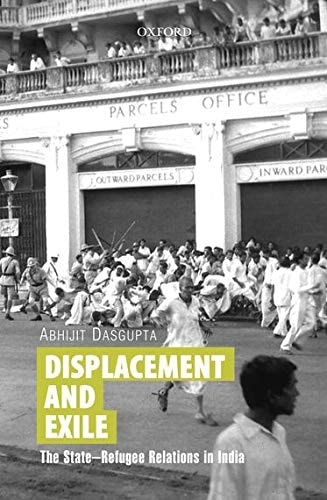
This study highlights some emerging issues in the study of displaced persons in India, like the agency and voices of people who flee across an international border, the identities they forge for themselves, their relations with the hosts and their interactions with the state and non-governmental organizations. Three case studies are examined here: (a). aPartition refugeesa, from East Pakistan to West Bengal, (b). Tamil refugees, from Sri Lanka to India and (c). Bangladesh Liberation War refugees from East Pakistan to West Bengal. The reader will find that each case is in itself highly complex. The treatment meted out to the displaced people in India has not been consistent. This study shows that the responses of the state to cross-border displacement have been varied over time and space. The Indian state has sovereign rights to decide who is to be considered as a refugee, who should receive relief and rehabilitation and who is to be repatriated. In the absence of national laws for the refugees in India, the state is the final arbitrator on all such matters.
Menrva's Summary
THE THESIS
This study investigates the inconsistent and varied responses of the Indian state toward cross-border displaced persons in the absence of formal national refugee legislation. Abhijit Dasgupta, a scholar of migration and social displacement, utilizes a comparative framework to analyze how the state exercises sovereign authority over relief, rehabilitation, and repatriation. By examining the agency of the displaced alongside state policy, the author argues that the lack of a codified legal framework leaves the state as the final, often unpredictable, arbitrator of refugee status.
THE SCOPE MAP
What You Will Find
- Comparative analysis of three distinct displacement events: Partition refugees from East Pakistan, Tamil refugees from Sri Lanka, and Bangladesh Liberation War refugees.
- Examination of the interaction between displaced populations, host communities, and non-governmental organizations.
- Qualitative assessment of how refugee identities are forged and maintained within a foreign state context.
- Analysis of the legal and political mechanisms governing state sovereignty and border control in India.
THE AUTHORITY PERSPECTIVE
Experts recognize this work as a critical contribution to the study of South Asian migration and state policy. Readers frequently note the academic density of the prose and the depth of the case studies provided.
Page Count:
288
Publication Date:
2016-03-28
Publisher:
Oxford University Press
ISBN-10:
0199461171
ISBN-13:
9780199461172
History
International relations
Pakistanis
Refugees india
Tamil Indic People
Human rights
Sociology
Community Tags
Similar Books