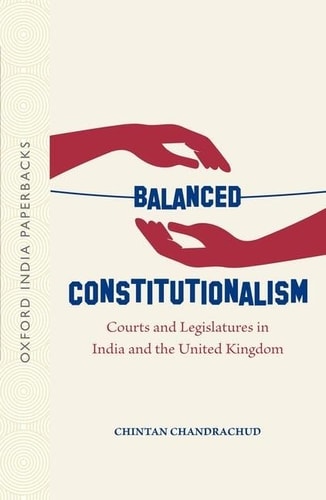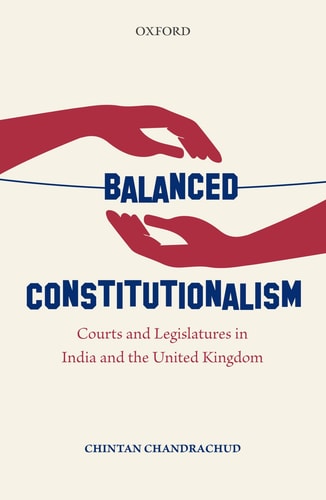
Balanced Constitutionalism: Courts and Legislatures in India and the United Kingdom
0
0
As an Amazon Associate and affiliate partner, Menrva Books earns from qualifying purchases. Learn more
Author Description
The Human Rights Act (HRA) of the UK, enacted in 1998, provoked particular interest amongst scholars. Unlike systems of parliamentary sovereignty and judicial supremacy, it promised a new, 'balanced' model for the protection of rights, which conferred courts with a limited power of review over legislation. Under this new model, rights-based decision-making was expected to be balanced amongst courts and legislatures, rather than lopsided in favour of either. Indian courts, on the other hand, have always been constitutionally entrusted with the power to strike down primary legislation enacted by the Union and state legislatures.This book examines the promise of the new model against its performance in practice by comparing judicial review under the HRA to an exemplar of the old model of judicial review, the Indian Constitution. It argues that although the HRA fosters a more balanced allocation of powers between legislatures and courts than the Indian Constitution, it does so for a novel reason. Balanced constitutionalism is not achieved through the legislative rejection of judicial decision-making about rights. Instead, the nature of the remedy under the HRA enables British courts to assert their genuine interpretations of rights in situations in which Indian courts find it difficult to do so.
Menrva's Summary
THE THESIS
How does the Human Rights Act of the United Kingdom compare to the Indian Constitution in achieving a balanced allocation of power between courts and legislatures regarding rights-based decision-making? Chintan Chandrachud, a legal scholar, investigates the efficacy of the UK's 'balanced' model of judicial review by contrasting it with the established, more robust judicial oversight found in the Indian constitutional framework. The author analyzes the practical application of these two distinct systems to determine how each manages the tension between judicial interpretation and legislative authority. The book posits that the UK model succeeds in creating a unique equilibrium not through legislative override, but through the specific nature of the remedies available to British courts.
THE SCOPE MAP
What You Will Find
- Comparative analysis of the UK Human Rights Act of 1998 and the Indian Constitution.
- Examination of judicial review mechanisms and their impact on primary legislation.
- Evaluation of the 'balanced' model of rights protection versus traditional judicial supremacy.
- Discussion on the role of legal remedies in facilitating judicial interpretation of rights.
THE AUTHORITY PERSPECTIVE
Legal scholars and practitioners identify this work as a significant contribution to comparative constitutional studies. Readers frequently note the academic density of the prose and the precision with which the author navigates complex jurisdictional differences.
Page Count:
352
Publication Date:
2017-04-23
Publisher:
Oxford University Press
ISBN-10:
0199470588
ISBN-13:
9780199470587
Comparative Law
Human rights
Constitutional Law
Law