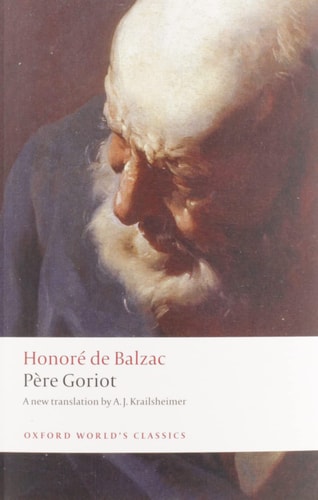
Pere Goriot
0
0
As an Amazon Associate and affiliate partner, Menrva Books earns from qualifying purchases. Learn more
Author Description
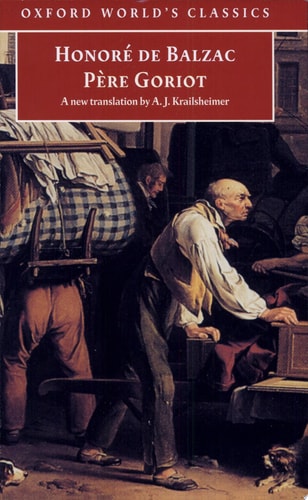
This fine example of the French realist novel contrasts the social progress of an impoverished but ambitious aristocrat with the tale of a father, whose obsessive love for his daughters leads to his personal and financial ruin.About the Series: For over 100 years Oxford World's Classics has made available the broadest spectrum of literature from around the globe. Each affordable volume reflects Oxford's commitment to scholarship, providing the most accurate text plus a wealth of other valuable features, including expert introductions by leading authorities, voluminous notes to clarify the text, up-to-date bibliographies for further study, and much more.
Menrva's Summary
THE PULSE
The narrative centers on the intersection of Eugene de Rastignac’s social climbing and the tragic, self-destructive devotion of Pere Goriot. Rastignac, a young law student from the provinces, arrives in Paris with aspirations to ascend the social hierarchy, eventually finding himself entangled in the lives of the residents of the Maison Vauquer. He is opposed by the rigid, exclusionary structures of Parisian high society and his own lack of capital. The story unfolds through a third-person perspective that meticulously documents the moral decay of the city and the physical squalor of the boarding house, contrasting these with the opulent salons of the aristocracy. The narrative framework relies on the gradual disillusionment of the protagonist as he witnesses the consequences of unchecked ambition and familial sacrifice.
INSIDE THE PAGES
- Detailed examination of the Parisian social hierarchy in the 19th century
- Use of the boarding house as a microcosm for societal corruption
- Character-driven exploration of paternal obsession and filial ingratitude
- Meticulous descriptions of physical environments and material conditions
- Integration of recurring characters from the broader Comedie Humaine cycle
- Focus on the moral compromises required for upward mobility
- Contrast between the innocence of the provinces and the cynicism of the capital
- Analytical approach to the influence of money on human relationships
THE COLLECTIVE ECHO
Readers and critics frequently highlight the novel as a foundational text for the realist movement due to its unflinching portrayal of social ambition. Discussion often centers on the stark contrast between the protagonist's moral evolution and the tragic decline of the titular character. Many observers note that the pacing is deliberate, allowing for a deep exploration of the psychological motivations behind each character's actions. The effectiveness of the world-building is often praised for its ability to render 19th-century Paris as a tangible, suffocating force. Scholars frequently emphasize how the thematic threads of greed and social status remain relevant to contemporary discussions regarding class mobility.
Page Count:
304
Publication Date:
2009-05-05
Publisher:
Oxford University Press
ISBN-10:
0199538751
ISBN-13:
9780199538751
Historical Fiction
Fathers and daughters
Coming of Age
Social Commentary
Classic Literature
Paris France
Realism
French literature