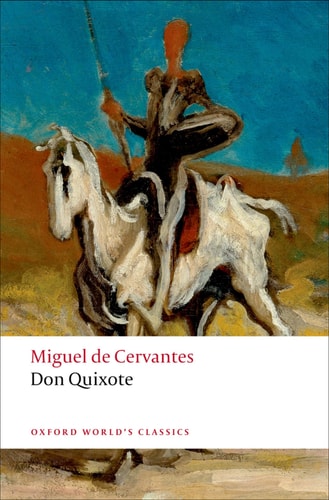
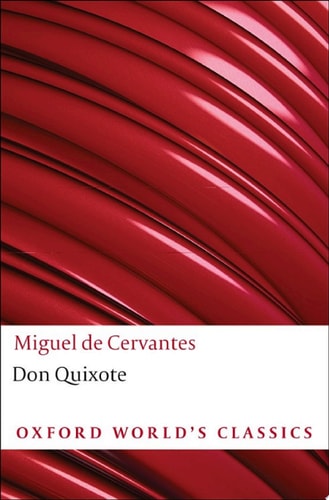
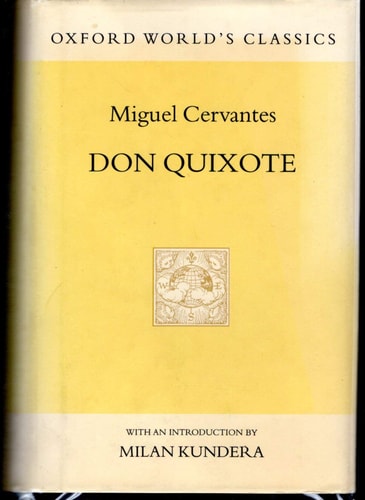
Don Quixote
0
0
As an Amazon Associate and affiliate partner, Menrva Books earns from qualifying purchases. Learn more
Author Description
Don Quixote, originally published in two parts in 1605 and 1615, stands as Cervantes' belated but colossal literary success. A work which has achieved mythic status, it is considered to have pioneered the modern novel. Don Quixote, a poor gentleman from La Mancha, Spain, entranced by the code of chivalry, seeks romantic honor through absurd and fantastic adventures. His fevered imagination turns everyday objects into heroic opponents and stepping stones to greater glory; each exploit serves as a comic, yet disturbing commentary on the psychological struggle between reality and illusion, fact and fiction. This celebrated translation by Charles Jarvis offers a new introduction and notes which provide essential background information.About the Series: For over 100 years Oxford World's Classics has made available the broadest spectrum of literature from around the globe. Each affordable volume reflects Oxford's commitment to scholarship, providing the most accurate text plus a wealth of other valuable features, including expert introductions by leading authorities, voluminous notes to clarify the text, up-to-date bibliographies for further study, and much more.
Menrva's Summary
THE PULSE
Driven by an obsession with chivalric romances, an aging nobleman decides to become a knight-errant to revive the lost virtues of a bygone age. Alonso Quixano, renaming himself Don Quixote, recruits a pragmatic peasant named Sancho Panza to serve as his squire. Together, they traverse the Spanish countryside, where Quixote’s distorted perception transforms mundane reality into a theater of giants, enchanters, and damsels in distress. The narrative employs a meta-fictional framework, often citing apocryphal historians to document the protagonist's increasingly erratic exploits.
INSIDE THE PAGES
- Use of meta-fictional commentary regarding the authorship of the text
- Juxtaposition of high-flown chivalric language with colloquial peasant speech
- Episodic structure detailing a series of failed heroic quests
- Exploration of the psychological boundary between sanity and delusion
- Satirical critique of the popular romantic literature of the 17th century
- Development of the dynamic between the idealistic master and the grounded squire
- Incorporation of interpolated novellas and secondary character arcs
- Detailed depiction of the social and economic landscape of 17th-century Spain
THE COLLECTIVE ECHO
Readers and critics frequently identify this work as the foundational text of the modern novel due to its complex narrative structure and character depth. Discussion often centers on the tragicomic nature of the protagonist, whose noble intentions are constantly undermined by his inability to perceive the world as it truly exists. Scholars highlight the sophisticated interplay between the idealism of the knight and the realism of his squire, which provides a balanced critique of human nature. The text is widely recognized for its enduring influence on Western literature, with many noting that its humor remains as sharp today as it was upon its initial publication. Readers often find the shifting perspectives and the author's self-referential style to be the most compelling aspects of the reading experience.
Page Count:
1120
Publication Date:
2008-01-01
Publisher:
Oxford University Press
ISBN-10:
0199537895
ISBN-13:
9780199537891
Adventure
Satire
European
Spain fiction
Historical
classic
Adventure fiction
Community Tags
Other Editions(5)


Similar Books



Reader Comments
Share Your Thoughts
No comments yet. Be the first to share your thoughts!