Don Quixote de la Mancha
0
0
As an Amazon Associate and affiliate partner, Menrva Books earns from qualifying purchases. Learn more
Author Description
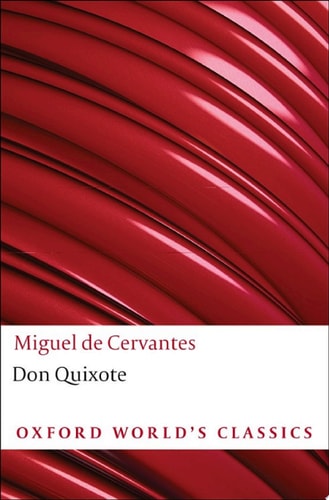
'he thought it expedient and necessary that he should commence knight-errant, and wander through the world, with his horse and arms, in quest of adventures' Don Quixote, first published in two parts in 1605 and 1615, is one of the world's greatest comic novels. Inspired by tales of chivalry, Don Quixote of La Mancha embarks on a series of adventures with his faithful servant Sancho Panza by his side. The novel has acquired mythic status and its influence on modern fiction is profound. ABOUT THE SERIES: For over 100 years Oxford World's Classics has made available the widest range of literature from around the globe. Each affordable volume reflects Oxford's commitment to scholarship, providing the most accurate text plus a wealth of other valuable features, including expert introductions by leading authorities, helpful notes to clarify the text, up-to-date bibliographies for further study, and much more.
Menrva's Summary
THE PULSE
Driven by an obsession with chivalric romances, an aging nobleman decides to revive the tradition of knight-errantry by wandering the Spanish countryside in search of glory. Accompanied by his pragmatic squire, Sancho Panza, the protagonist attempts to impose a heroic framework onto a mundane reality that consistently resists his delusions. The narrative utilizes a meta-fictional structure, often incorporating multiple narrators and found-manuscript devices to examine the boundary between sanity and imagination. As the pair encounters innkeepers, peasants, and aristocrats, their interactions expose the social hierarchies and cultural tensions of early seventeenth-century Spain.
INSIDE THE PAGES
- Meta-fictional narrative layers
- Picaresque episodic structure
- Satirical commentary on chivalric literature
- Contrast between idealism and realism
- Dialogue-driven character development
- Exploration of madness and perception
- Social critique of the Spanish Golden Age
- Use of unreliable narrators
THE COLLECTIVE ECHO
Readers and critics frequently identify this work as a foundational text for the modern novel due to its complex interplay between reality and illusion. Discussion often centers on the evolving relationship between the idealistic Don Quixote and the grounded Sancho Panza, which serves as the emotional anchor of the narrative. Scholars highlight the author's use of irony and humor to critique the rigid social structures of the time while simultaneously celebrating the human capacity for imagination. The pacing is noted for its episodic nature, which allows for a wide variety of encounters that test the protagonist's resolve and sanity. Many readers find the philosophical depth of the text remains relevant, as it continues to prompt questions about the nature of truth and the necessity of personal conviction.
Page Count:
1008
Publication Date:
2008-01-01
Publisher:
OUP Oxford
ISBN-10:
0191609110
ISBN-13:
9780191609114
Adventure
Satire
Psychological Thrillers
English & College Success
Spanish literature
English
Picaresque
classic
Adventure fiction
Spain fiction
Community Tags
Other Editions(4)


Similar Books