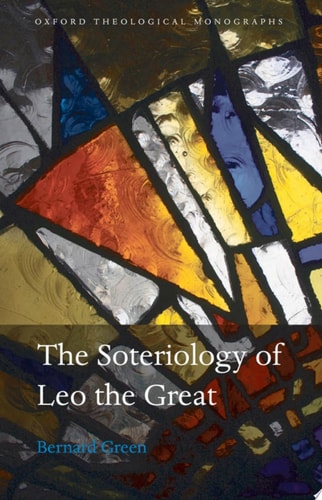
The Soteriology of Leo the Great
0
0
As an Amazon Associate and affiliate partner, Menrva Books earns from qualifying purchases. Learn more
Author Description
Leo the Great was the beneficiary of the consolidation of the power of the papacy in Rome and the Christianization of the city over the course of the preceding century. In this carefully nuanced study, Bernard Green demonstrates the influences at work on this celebrated pope's development as a theological thinker, including two of the most renowned theological names of the period, Ambrose of Milan and Augustine of Hippo.Green charts Leo's theological journey from his first encounters with the Pelagian and Nestorian controversies, where he engaged Cassian as an advisor. Leo took an admiring though limited view of Cyril of Alexandria but misunderstood the weaknesses in Nestorius' thought. As pope, Leo preached a civic Christianity, accessible to all citizens, baptising the virtues of the classical and civic past.The study then examines Leo's recently dated sermons and reveals the evolution of his thought as he worked out a soteriology that gave full value to both the divinity and humanity of Christ, especially in reaction to Manichaeism. In the crisis that led to Chalcedon, Leo's earlier misunderstanding of Nestorius affected the content of his Tome, which was atypical of the Christology and soteriology he had developed in his earlier preaching. Green persuasively concludes that its emphasis on the distinction of the two natures was an uncharacteristic attempt to respond to both Eutyches and Nestorius, as this pope understood them. In the light of Chalcedon, Leo produced a revised statement of Christology, the Letter to the Palestinian monks, which is both more accomplished and better aligned with his characteristic thought.
Menrva's Summary
THE THESIS
This study investigates the development of Pope Leo the Great's soteriology by examining the intellectual influences and historical pressures that shaped his theological framework. Bernard Green, a scholar of patristic theology, utilizes a rigorous analysis of Leo's sermons and correspondence to trace the evolution of his thought. By situating Leo within the context of the Roman papacy and the broader Christological debates of the fifth century, Green argues that Leo's theological positions were often reactive to specific controversies, such as Manichaeism and the Nestorian crisis. The work provides a detailed reconstruction of how Leo reconciled classical civic virtues with Christian doctrine to form a coherent, accessible theology.
THE SCOPE MAP
What You Will Find
- An analysis of the influence of Ambrose of Milan and Augustine of Hippo on Leo's intellectual development.
- A chronological examination of Leo's engagement with the Pelagian, Nestorian, and Eutychian controversies.
- A critical assessment of the theological content within Leo's sermons and his seminal Tome.
- A comparative study of Leo's Christological statements before and after the Council of Chalcedon.
THE AUTHORITY PERSPECTIVE
Scholars recognize this monograph as a precise and nuanced contribution to the study of fifth-century ecclesiastical history. Readers frequently note the academic density of the prose, which assumes a foundational knowledge of patristic Christology and the historical context of the Roman Church.
Page Count:
288
Publication Date:
2008-06-15
Publisher:
Oxford University Press
ISBN-10:
0199534950
ISBN-13:
9780199534951
Biography
History
Religion
Christianity
Theology
Community Tags
Other Editions(2)
Similar Books